
Dichrorampha bittana
(Busck, 1906)
Dichrorampha bittana is a small tortricid originally described as Hemimene bittana by Busck in 1906. It belongs to the diverse leaf-roller Tortricidae, a group containing numerous agricultural pests and species with specialized plant relationships. The species is recorded from the Canadian provinces of Alberta and Saskatchewan, placing it within the Nearctic fauna. Like many Dichrorampha species, it likely exhibits specific ecological associations, though detailed biological studies remain limited.
Pronunciation
How to pronounce Dichrorampha bittana: /ˌdaɪkroʊˈræmfə ˈbɪtənə/
These audio files are automatically generated. While they are not always 100% accurate, they are a good starting point.
Identification
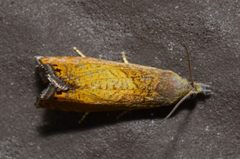
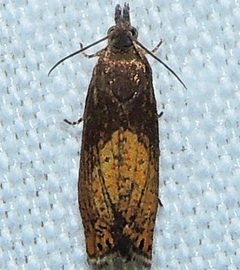
Dichrorampha bittana can be distinguished from through examination of genitalia and wing pattern characteristics typical of the . The genus Dichrorampha is characterized by relatively small size, often with distinctive forewing patterns combining bands, spots, or striations. -level identification within Dichrorampha generally requires dissection and comparison of male genitalia structures, particularly the valvae and , and female genitalia including the sterigma and signum. Without specific published descriptions of diagnostic features for D. bittana, precise identification relies on reference to and original description materials.
Images
Distribution
Recorded from Alberta and Saskatchewan, Canada. The occurs within the Nearctic region in the Prairie Provinces, suggesting association with grassland, parkland, or transition zone .
Similar Taxa
- Dichrorampha velataSimilar with overlapping alpine and montane distribution in Europe; D. velata was recently described from the Alps and shares the small size and habits typical of many Dichrorampha , though D. bittana occurs in North America rather than Europe.
- Dichrorampha alpestranaAnother European historically confused with related ; demonstrates the taxonomic complexity within the that requires careful morphological and genetic analysis for species delineation.