
Rhyacionia subtropica
Miller, 1961
Subtropical Pine Tip Moth
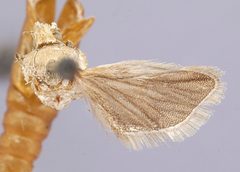
Rhyacionia subtropica is a small tortricid with a wingspan of approximately 18 mm. It is distributed in the southeastern United States, Cuba, and Belize. The larvae are specialized feeders on pine , attacking the terminal shoots of their .

Pronunciation
How to pronounce Rhyacionia subtropica: //ˌraɪkɪˈoʊniə səbtroʊˈpɪkə//
These audio files are automatically generated. While they are not always 100% accurate, they are a good starting point.
Identification
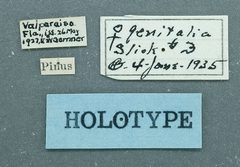
Distinguished from other Rhyacionia by its subtropical distribution and association with specific pine . Positive identification requires examination of genitalia or molecular analysis; external alone is insufficient for reliable species-level determination within this .
Images
Appearance
Small with a wingspan of about 18 mm. Specific coloration and pattern details are not documented in available sources.
Habitat
Associated with pine forests in subtropical and warm temperate regions. Occurs in supporting its pine .
Distribution
United States: southern Alabama and Florida. Also recorded from Cuba and Belize.
Diet
Larvae feed on Pinus elliottii (slash pine), Pinus palustris (longleaf pine), Pinus thunbergiana (Japanese black pine), and Pinus caribaea (Caribbean pine). They attack the tips (terminal shoots) of their plants.
Host Associations
- Pinus elliottii - larval slash pine
- Pinus palustris - larval longleaf pine
- Pinus thunbergiana - larval Japanese black pine
- Pinus caribaea - larval Caribbean pine
Ecological Role
As a tip-feeding on pines, larvae may influence shoot growth patterns and potentially affect tree architecture, though specific ecological impacts have not been quantified.
Similar Taxa
- Rhyacionia frustranaAlso a pine tip with overlapping range; requires genitalia examination or geographic context (R. frustrana more widespread in eastern US) for separation.
- Rhyacionia rigidanaAnother pine-feeding with similar larval habits; morphological separation requires detailed examination.
More Details
Taxonomic history
Described by Miller in 1961. The epithet 'subtropica' reflects its distribution in subtropical regions relative to other members of the .
Collection records
53 observations documented on iNaturalist as of source date.