
Rhyacionia frustrana
(Scudder, 1880)
Nantucket Pine Tip Moth
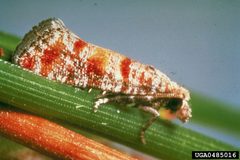
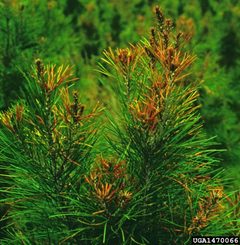
Rhyacionia frustrana is a small tortricid and significant forestry pest in North America and parts of the Caribbean and Central America. Larvae feed internally on growing shoots, buds, and conelets of numerous Pinus , causing growth loss and stem deformity. Damage is most severe during the first five years of tree development, affecting plantations, Christmas tree farms, and seed orchards. Multiple occur annually in warmer regions, with four to five generations per year reported in Florida.
Pronunciation
How to pronounce Rhyacionia frustrana: /ˌrhaɪəˈsoʊniə fɹʌˈstreɪnə/
These audio files are automatically generated. While they are not always 100% accurate, they are a good starting point.
Identification
Small size (wingspan ~11 mm) distinguishes from larger tortricid . Larvae are concealed within pine shoots, buds, and conelets, making field identification difficult without dissection of damaged tissue. Damage —stem deformity, stunted growth, and dying shoot tips on young pines—are more readily observed than the larvae themselves. Similar to other Rhyacionia species that attack pines; precise identification requires examination of adult genitalia or larval by .
Images
Appearance
Small with wingspan approximately 11 mm. are nondescript tortricid moths typical of the ; detailed coloration and pattern not specified in available sources.
Habitat
Young pine stands including plantations, wild pine seedlings in open areas, Christmas tree plantings, ornamental pines, and pine seed orchards. Associated with Pinus across a range of forest management and horticultural settings.
Distribution
United States: Massachusetts south to Florida, west to Missouri, Oklahoma, Texas, and California. Caribbean: Dominican Republic, Cuba, Jamaica. Central America: Mexico (Oaxaca), Guatemala, Honduras, Nicaragua.
Seasonality
emerge in early spring; as early as February in Florida. Four to five per year in Florida, suggesting extended activity through growing season in southern portions of range.
Diet
Larvae feed on growing shoots, buds, and conelets of pine (Pinus). Documented include Pinus caribaea, P. cubensis, P. banksiana, P. taeda, P. contorta, P. radiata, P. oocarpa, P. rigida, P. serotina, P. ponderosa, P. resinosa, P. clausa, P. sylvestris, P. echinata, P. elliottii, P. glabra, P. pungens, and P. virginiana.
Host Associations
- Pinus taeda - preferred increasing in Florida correlate with increasing
- Pinus caribaea -
- Pinus cubensis -
- Pinus banksiana -
- Pinus contorta -
- Pinus radiata -
- Pinus oocarpa -
- Pinus rigida -
- Pinus serotina -
- Pinus ponderosa -
- Pinus resinosa -
- Pinus clausa -
- Pinus sylvestris -
- Pinus echinata -
- Pinus elliottii -
- Pinus glabra -
- Pinus pungens -
- Pinus virginiana -
Life Cycle
Four to five per year in Florida; generation time varies with latitude and climate. stage not specified in available sources. Larval development occurs within tissues.
Behavior
Larvae feed internally within growing shoots, buds, and conelets, concealed from external view. emerge in early spring, with timing varying by region.
Ecological Role
Herbivore and significant pest of pine forestry and horticulture. Supports a complex of hymenopterous , though primary parasitoid require careful verification. influenced by availability and vegetation management practices.
Human Relevance
Major economic pest of young pine plantations, Christmas tree operations, ornamental pines, and seed orchards. Causes growth loss and stem deformity, reducing timber quality and marketability. Management of loblolly pine expansion in Florida complicated by associated increases in NPTM .
Similar Taxa
- Other Rhyacionia speciesCongeneric also attack pine shoots; require examination for reliable separation
- Other pine-feeding tortricidsSimilar concealed feeding habit in pine tissues; damage may overlap
Sources and further reading
- BugGuide
- Wikipedia
- GBIF taxonomy match
- iNaturalist taxon
- NCBI Taxonomy
- Catalogue of Life
- Nantucket Pine Tip Moth, Rhyacionia frustrana (Comstock) (Insecta: Lepidoptera: Tortricidae)
- Survey of Parasitoids Associated with Rhyacionia frustrana (Comstock) in Bulloch County, Georgia
- PRIMARY HYMENOPTEROUS PARASITES OF NANTUCKET PINE TIP MOTH, RHYACIONIA FRUSTRANA (COMSTOCK)1
- Volatiles Associated with Preferred and Nonpreferred Hosts of the Nantucket Pine Tip Moth, Rhyacionia frustrana
- Erratum: Effects of Vegetation Control on Parasitoids of the Nantucket Pine Tip Moth, Rhyacionia frustrana (Lepidoptera: Tortricidae)
- Effects of Vegetation Control on Parasitoids of the Nantucket Pine Tip Moth, Rhyacionia frustrana (Lepidoptera: Tortricidae)
- Within-tree response of Nantucket pine tip moth,Rhyacionia frustrana [Lep.: Tortricidae] Parasitoids to varying host densities