
Pseudexentera spoliana
(Clemens, 1864)
bare-patched leafroller moth
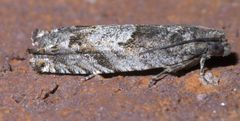
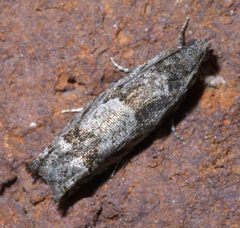
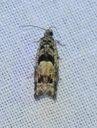
Pseudexentera spoliana, commonly known as the bare-patched leafroller , is a tortricid moth found in eastern North America. The species is an economically important defoliator of oak trees (Quercus spp.), with larvae feeding on oak foliage. moths are small, with a wingspan of approximately 19 mm. Mating is mediated by a species-specific system, with males attracted to (Z)-10-hexadecenyl acetate (Z10-16:Ac).
Pronunciation
How to pronounce Pseudexentera spoliana: //ˌpsuːdɛksɛnˈtɛrə spɔːliˈɑːnə//
These audio files are automatically generated. While they are not always 100% accurate, they are a good starting point.
Identification
Can be distinguished from congeneric by species-specific chemistry: males are attracted to Z10-16:Ac, whereas Pseudexentera oregonana males respond to Z8-14:Ac and P. mali males respond to Z,Z-8,10-16:Ac. lures targeted for each species are not cross-attractive. Morphological distinction from similar leafroller moths requires examination.
Images
Appearance
Small with wingspan approximately 19 mm. Specific coloration and pattern details of are not documented in available sources. The 'bare-patched leafroller' suggests distinctive wing markings, but these are not described in the literature.
Habitat
Oak (Quercus) forests and woodlands. Associated with supporting oak trees.
Distribution
United States and southern Canada, east of the Rocky Mountains.
Seasonality
Early-season flier; active in spring.
Diet
Larvae feed on Quercus (oaks). Specific feeding habits of are not documented.
Host Associations
- Quercus - larval food plantoak
Behavior
Males are specifically attracted to female-produced components and do not respond to of other Pseudexentera . This species-specific response prevents cross-attraction to sympatric .
Ecological Role
Defoliator of oak trees. Classified as economically important due to feeding damage to oak foliage.
Human Relevance
Considered an economically important pest due to larval defoliation of oak trees. components have been identified for potential use in monitoring and management programs.
Similar Taxa
- Pseudexentera oregonanaSympatric congeneric leafroller ; distinguished by male attraction to different component (Z8-14:Ac) and association with aspen (Populus) rather than oak
- Pseudexentera maliCongeneric distinguished by male attraction to Z,Z-8,10-16:Ac and association with apple (Malus) as plant
More Details
Sex pheromone chemistry
The major component is (Z)-10-hexadecenyl acetate (Z10-16:Ac). Additional compounds identified in female extracts include hexadecyl acetate (16:Ac), (Z)-10-hexadecen-1-ol (Z10-16:OH), hexadecan-1-ol (16:OH), and possibly (Z)-12-hexadecenyl acetate (Z12-16:Ac), though these did not enhance male attraction when added to Z10-16:Ac.