Pseudexentera cressoniana
(Clemens, 1864)
Shagbark Hickory Leafroller Moth, Shagbark Hickory Leafroller, Oak Olethreutid Leafroller
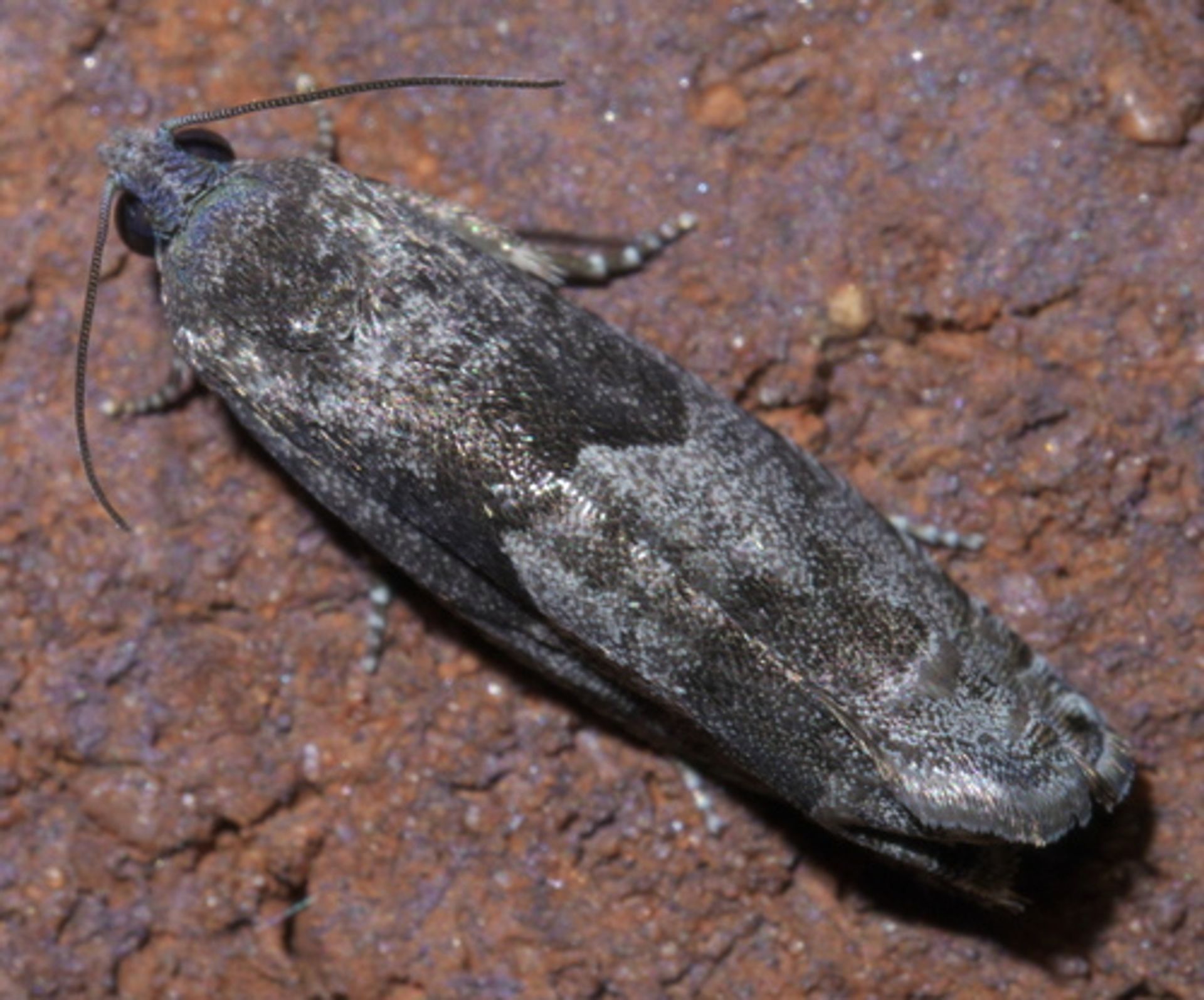
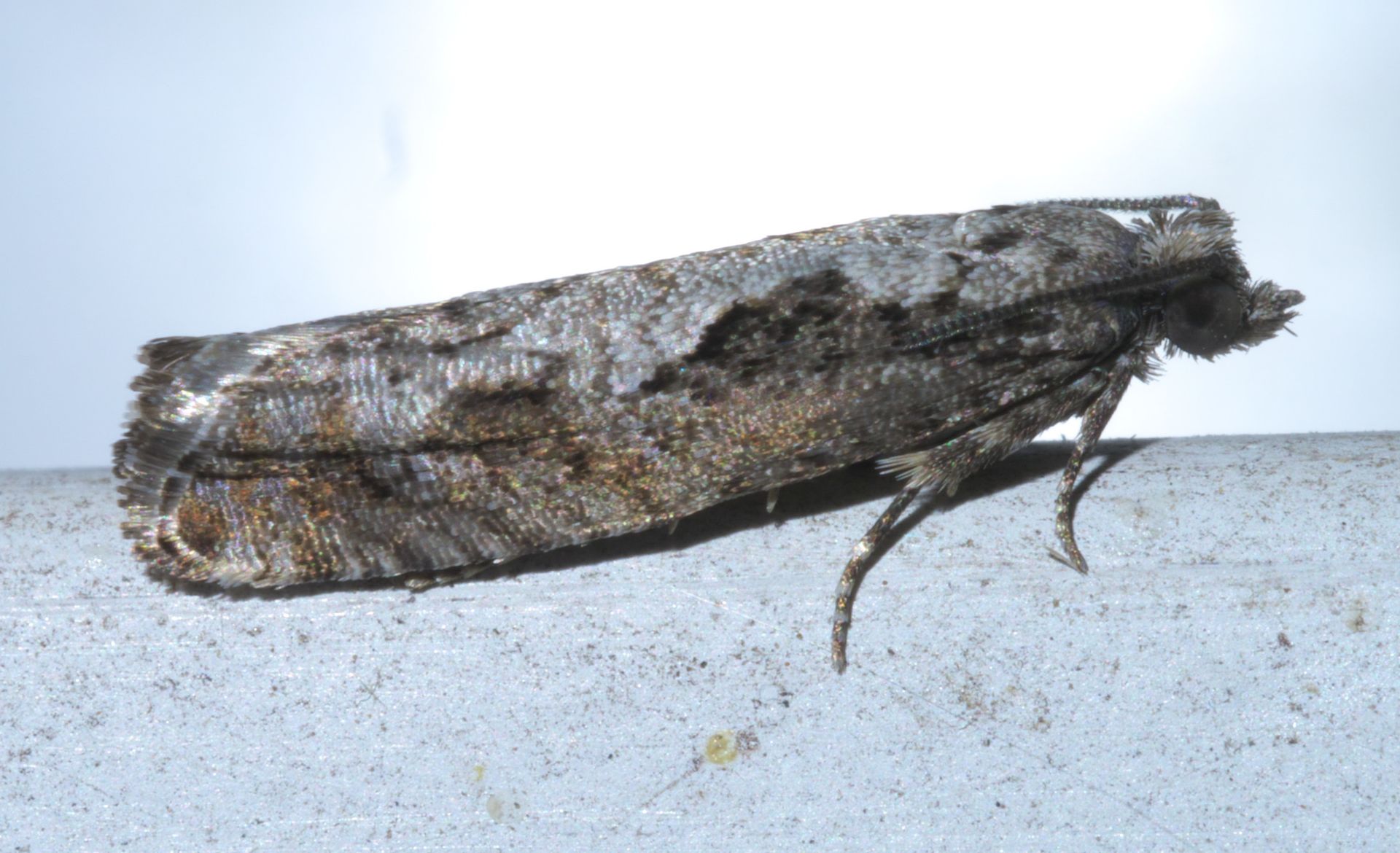
Pseudexentera cressoniana is a small tortricid whose larvae roll or fold leaves of hickory and oak . The species is commonly known as the shagbark hickory leafroller due to its association with Carya ovata and related plants. are and attracted to light. The species was first described by Clemens in 1864 and is widespread in eastern North America.
Pronunciation
How to pronounce Pseudexentera cressoniana: /suːˌdɛkˈsɛn.tɛrə ˌkrɛs.oʊˈniː.ænə/
These audio files are automatically generated. While they are not always 100% accurate, they are a good starting point.
Identification
are small with wingspan approximately 12–16 mm. Forewings are mottled gray-brown with variable darker markings; a distinct dark spot near the wing apex is often present. Hindwings are pale grayish. The can be distinguished from similar Pseudexentera species by genitalia examination; P. cressoniana males have distinctive valvae with a prominent cucullus. Larvae are pale green with a brown capsule, found inside rolled or folded leaves of hickory and oak.
Images
Habitat
Deciduous forests and woodlands where trees occur, particularly stands of shagbark hickory (Carya ovata), other Carya , and Quercus species. Found in both mature forest and fragmented woodland .
Distribution
Eastern North America, from southern Ontario and Quebec south to Florida, west to Texas and Oklahoma. Most common in the Appalachian and Ozark regions.
Seasonality
fly from late March to early June, with peak activity in April and May. Larval activity occurs from May through June. occurs in leaf rolls or in soil, with adults as pupae or possibly larvae.
Diet
Larvae feed on leaves of hickory (Carya) and oak (Quercus) , particularly shagbark hickory (Carya ovata). Specific feeding involves rolling or folding leaf edges to create shelters.
Host Associations
- Carya ovata - larval primary , shagbark hickory
- Carya - larval multiple hickory
- Quercus - larval oak
Life Cycle
stage on foliage. Larval stage involves leaf-rolling on hickory and oak leaves, with larvae feeding inside shelters. occurs within the leaf roll or in soil. emerge in spring. Single per year ().
Behavior
Larvae are solitary and construct leaf rolls by folding or rolling leaf edges, securing them with silk. They feed and develop within these shelters. are and attracted to artificial light sources.
Ecological Role
Larval leaf-rolling creates microhabitats that may be used by other small . As a folivore, it contributes to nutrient cycling and serves as prey for and birds. Not considered a significant pest in natural .
Human Relevance
Occasional minor pest in hickory nut orchards, though rarely causing economically significant damage. Used as an for oak-hickory forest in biodiversity assessments. are occasionally collected by lepidopterists.
Similar Taxa
- Pseudexentera habrosanaSimilar size and coloration; distinguished by male genitalia structure and larval association with Betula (birch) rather than Carya/Quercus
- Pseudexentera costomaculanaOverlapping range and appearance; distinguished by forewing pattern with more distinct costal spots and different larval
- Olethreutes hamamelianaSimilar leaf-rolling habit on oak; distinguished by more uniform gray forewings and association with witch-hazel (Hamamelis)
More Details
Taxonomic History
Originally described as Hedya cressoniana by James Brackenridge Clemens in 1864, later transferred to Pseudexentera. The specific epithet honors Ezra Townsend Cresson, an early American entomologist.
MONA/Hodges Number
3246 in the North American Photographers Group numbering system.
Observation Data
iNaturalist records indicate 549+ observations, suggesting the is relatively well-documented and not rare within its range, though undercollected in some regions.