
Proteoteras moffatiana
Fernald, 1905
gray-flanked proteotera, maple shoot borer, maple bud borer moth
Proteoteras moffatiana is a tortricid described by Fernald in 1905. It is commonly known as the gray-flanked proteotera or maple shoot borer, reflecting its association with maple plants. The species is assigned MONA/Hodges number 3235. As a member of the Olethreutinae, it belongs to a group of tortricids that typically develop as borers in plant tissues.
Pronunciation
How to pronounce Proteoteras moffatiana: /ˌproʊtiːoʊˈtɛrəs ˌmɒfəˈtaɪəna/
These audio files are automatically generated. While they are not always 100% accurate, they are a good starting point.
Identification
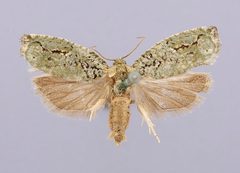
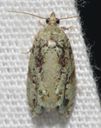
The can be distinguished from its Proteoteras aesculana (maple twig borer moth) by differences in wing pattern and tissue specificity; P. moffatiana is associated with maple shoots and buds rather than twigs and petioles. Definitive identification typically requires examination of genitalia or comparison with reference specimens. The 'gray-flanked proteotera' suggests distinctive gray lateral markings on the wings, though specific pattern details require verification from primary sources.
Images
Habitat
Occurs in where maple trees (Acer spp.) are present, including deciduous forests, woodlands, and urban or suburban areas with maple plantings. The larval stage requires living maple tissue for development.
Distribution
Recorded from the eastern United States, with distribution records including Vermont and other states. The precise range boundaries are not well documented in available sources.
Seasonality
have been observed in early spring; specific period documentation is limited but the likely follows the typical pattern for maple-associated tortricids with adult timed to plant .
Diet
Larvae feed internally on maple (Acer) shoots and buds. The specific feeding habits of are not documented in available sources.
Host Associations
- Acer - larval maple shoots and buds
Life Cycle
Complete with larval development as a borer in maple shoots and buds. likely occurs in soil or within plant debris, though specific details are not documented in available sources.
Behavior
are and attracted to light. Larvae are concealed feeders, tunneling in maple shoots and buds.
Ecological Role
As a borer in maple tissues, larvae may influence shoot growth and bud development. The contributes to the guild of maple-associated herbivores in deciduous forest .
Human Relevance
The 'maple shoot borer' suggests potential economic significance in maple syrup production or nursery operations, though specific pest status documentation is not available in the provided sources. Not known to be a major agricultural pest.
Similar Taxa
- Proteoteras aesculanaSimilar maple-associated ; distinguished by differences in wing pattern and larval feeding site specificity (twigs and petioles vs. shoots and buds)
More Details
Taxonomic authority
First described by Fernald in 1905. The epithet honors an individual with surname Moffat, likely an entomological colleague or collector of the .
MONA/Hodges number
Assigned number 3235 in the North American Photographers Group (MPG) checklist system.