
Epinotia solandriana
(Linnaeus, 1758)
Birch Leafroller Moth
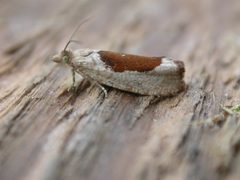
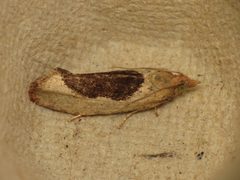
Epinotia solandriana is a small tortricid with a wingspan of 16–21 mm, distributed across Europe, Asia (China, Korea, Japan, Russia), and North America. fly from July to September and show considerable variation in forewing coloration and pattern. Larvae are specialized leaf rollers on birch, hazel, and willow, folding leaves to create shelters while feeding.
Pronunciation
How to pronounce Epinotia solandriana: /ɛpɪˈnoʊʃə sɒˈlændriəna/
These audio files are automatically generated. While they are not always 100% accurate, they are a good starting point.
Identification
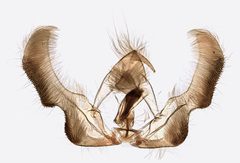
Distinguished from similar Epinotia by combination of elongate forewings with moderately arched , angulated basal patch edge, and characteristic blotch (white/pale or dark reddish-brown). Variation in ground color and blotch requires careful examination; some forms may resemble other birch-feeding tortricids.
Images
Habitat
Forests and woodlands containing trees: birch (Betula), hazel (Corylus), and willow (Salix). Larval specifically involves living leaves of these host plants.
Distribution
Europe; Asia: China (Jilin, Heilongjiang, Shaanxi, Gansu, Qinghai provinces), Korea, Japan, Russia; North America: Canada (Ontario), with records in Belgium and other European localities confirmed via GBIF.
Seasonality
active July to September; single per year (). Timing varies by geographic location.
Diet
Larvae feed on leaves of birch (Betula ), hazel (Corylus avellana), and willow (Salix species). do not feed.
Host Associations
- Betula - larval food plantprimary ; larvae are leaf rollers on birch leaves
- Corylus avellana - larval food planthazel
- Salix - larval food plantwillow
Life Cycle
Complete : , larva, pupa, . Larvae develop through summer, rolling leaves of plants for shelter and feeding. occurs within rolled leaves or in litter. Adults emerge July–September; single .
Behavior
Larvae exhibit leaf-rolling , folding birch, hazel, or willow leaves to create protective shelters while feeding. This behavior gives the its .
Ecological Role
Herbivore: larval feeding on birch, hazel, and willow leaves. Serves as for ( recorded in Ontario study). Contributes to nutrient cycling through leaf damage and processing.
Human Relevance
Minor forestry significance as a leaf-rolling pest on birch and related trees; damage generally not severe enough to warrant control measures. Subject of biological study for understanding tortricid- plant relationships.
Similar Taxa
- Other Epinotia speciesSimilar size and general ; distinguished by specific wing pattern elements including shape of basal patch and blotch
- Other birch-feeding TortricidaeShare plants and ; require examination of genitalia or detailed wing pattern for definitive identification