
Nemapogon cloacella
(Haworth, 1828)
Cork Moth
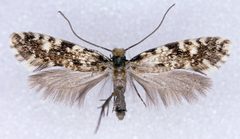
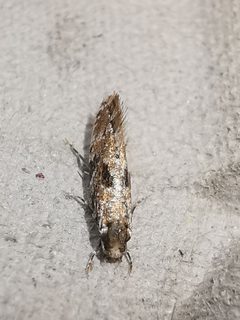
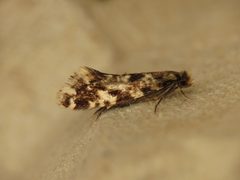
A small fungus with wingspan 10–18 mm, characterized by irregularly mottled forewings in black, brown, white and grey. Larvae feed primarily on bracket fungi, particularly oak mazegill (Daedalea quercina) and birch polypore (Piptoporus betulinus), with plant debris consumed when fungal are unavailable. are , active throughout summer, and typically encountered at dusk. Widespread across western Palearctic and North America, with preferred in woodlands containing abundant dead trees.
Pronunciation
How to pronounce Nemapogon cloacella: //ˌnɛməˈpoʊɡɒn kloʊˈæsələ//
These audio files are automatically generated. While they are not always 100% accurate, they are a good starting point.
Identification
Distinguished from close relatives such as Nemapogon granella (European corn ) by combination of: irregular forewing mottling pattern with alternately grey and white fringes; pale yellow tuft (not white); and ecological association with dead wood and bracket fungi rather than stored products. proportionally shorter than in some . Larval preference for oak mazegill and birch polypore distinguishes it from N. granella, which infests stored grains and seeds.
Images
Habitat
Woodland with abundant dead trees and decaying wood. Presence of bracket fungi, particularly oak mazegill (Daedalea quercina) and birch polypore (Piptoporus betulinus), is critical for larval development.
Distribution
Western Palearctic (Europe, excluding France—though this absence is considered doubtful given presence in all surrounding countries); North America, including British Columbia.
Seasonality
active throughout summer months. activity pattern, typically encountered at dusk, though occasionally observed earlier in day.
Diet
Larvae feed primarily on bracket fungi, especially oak mazegill (Daedalea quercina) and birch polypore (Piptoporus betulinus). Plant debris and similar materials consumed when preferred fungal unavailable. Historical reports of feeding on cork, dried fruit, seeds, and cereal grains appear to reflect confusion with Nemapogon granella.
Host Associations
- Daedalea quercina - primary larval oak mazegill fungus
- Piptoporus betulinus - larval birch polypore
Behavior
, most active at dusk.
Ecological Role
Decomposer; larvae facilitate breakdown of dead wood through feeding on bracket fungi associated with decaying timber.
Human Relevance
'cork ' derives from historical but erroneous association with cork feeding. Occasionally encountered in buildings near woodland . Not considered a significant pest of stored products—such damage attributed to Nemapogon granella.
Similar Taxa
- Nemapogon granellaEuropean corn ; similar mottled forewing pattern but associated with stored grains and seeds rather than woodland fungi; tuft white rather than pale yellow. Historical confusion between these led to misattribution of diet and pest status.
Misconceptions
The 'cork ' and historical reports of larvae feeding on cork, dried fruit, cereal grains, and other stored products reflect confusion with Nemapogon granella. N. cloacella is primarily a fungus-feeder of woodland , not a stored product pest.