
Oinophila v-flava
(Haworth, 1828)
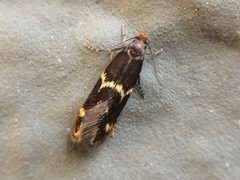
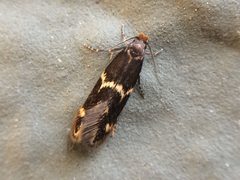
Yellow V Moth
A small tineid with a wingspan of approximately 10 mm, widespread across temperate zones worldwide. are active in the evening during summer months in western Europe. The has established in New Zealand since 2001.
Pronunciation
How to pronounce Oinophila v-flava: /ɔɪˈnɒfɪlə ˈviː ˈflɑːvə/
These audio files are automatically generated. While they are not always 100% accurate, they are a good starting point.
Identification
Distinguished from similar small tineid moths by its specific association with wine cellars and cork ; the 'v' in the name may refer to a wing marking, though this is not explicitly confirmed in available sources. Separation from other Oinophila species requires examination.
Images
Habitat
Frequently found in human dwellings, particularly cellars and wine storage areas. Associated with dry, sheltered environments containing vegetable matter or woody materials.
Distribution
Widespread in temperate zones from Europe to South Africa, North America, and Hawaii. Established in New Zealand since 2001. Records from the Azores (Faial, Flores, Pico, São Miguel, Terceira) indicate presence on Atlantic islands.
Seasonality
In western Europe, are active from July to September. Adults fly in the evening.
Diet
Larvae feed on dry vegetable matter and the bark of shrubs. Documented to damage dried foods and wine corks in domestic settings.
Life Cycle
Complete with , larva, pupa, and stages. Larval stage is the feeding and damaging phase. Specific duration of stages not documented.
Behavior
are , flying in the evening. , commonly occurring in homes and cellars. Larvae spin silk and construct feeding shelters.
Ecological Role
Decomposer of dry plant material; in human environments, acts as a pest of stored products. The name 'Oinophila' (wine-lover) reflects its ecological association with wine cellars.
Human Relevance
Household pest, particularly in wine cellars where larvae damage wine corks. Also reported to damage dried food products. that benefits from human-created environments.
Similar Taxa
- Tineola bisselliellaAnother tineid that infests human dwellings, but feeds primarily on keratinous materials (wool, hair) rather than vegetable matter and corks
- Tinea pellionellaCasemaking clothes moth with similar domestic preference, but constructs portable silk cases and feeds on keratin rather than cork
More Details
Etymology
The name 'Oinophila' derives from Greek, meaning 'wine-lover', referring to the ' association with wine corks. The specific epithet 'v-flava' refers to yellow coloration, with 'v' possibly indicating a wing marking.
Synanthropy
Like many Tineidae, this is —adapted to and dependent on human environments. Its presence in wine cellars and homes represents an evolutionary shift from natural to human-constructed .