
Dahlica lichenella
(Linnaeus, 1761)
Lichen Case-bearer
Dahlica lichenella is a bagworm moth in the Psychidae, commonly known as the Lichen Case-bearer. The is native to Europe but has been introduced to North America. Males have a wingspan of 13–16 mm and are active in early spring, while females are flightless and remain within their larval cases throughout their lives. Larvae construct small, inconspicuous cases from lichen fragments and other debris, often going unnoticed due to their cryptic appearance.
Pronunciation
How to pronounce Dahlica lichenella: /ˈdæhlɪkə ˌlɪkəˈnɛlə/
These audio files are automatically generated. While they are not always 100% accurate, they are a good starting point.
Identification
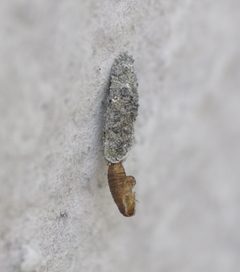
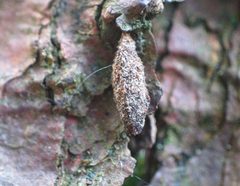
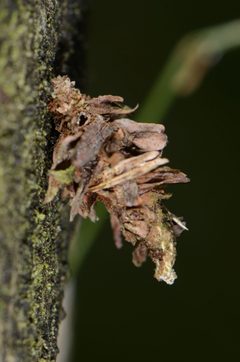
males are small with a wingspan of 13–16 mm. Females are (wingless) and remain in their larval cases. The larval case is small and constructed from lichen fragments, dirt, and wood particles, making it easily mistaken for debris. The case differs from the larger, more prominent evergreen bagworm (Thyridopteryx ephemeraeformis) by its diminutive size and less structured, more cryptic construction.
Images
Habitat
Found in environments where lichen grows, including woodlands, parks, and urban areas with suitable substrate. The occupies that support the lichen species used in case construction.
Distribution
Native to Europe, with records from Belgium and other European countries. Introduced to North America, where it has established .
Seasonality
are on wing from March to April or early May in western Europe. Larvae are present from June through March, in their cases. occurs within the case in March or April.
Diet
Larvae feed on lichen. Specific lichen have not been documented in the provided sources.
Life Cycle
are laid within the female's case. Larvae emerge and construct portable cases from lichen and debris, which they carry throughout development. Larvae overwinter in their cases. occurs within the case in spring, with males emerging to fly and seek females. Females remain in their cases, mate there, and lay eggs within the same structure.
Behavior
Females are flightless and remain in their larval cases for their entire lives. Males are active fliers in early spring. Larvae are mobile, carrying their cases as they forage for lichen.
Ecological Role
Larval feeding on lichen contributes to nutrient cycling in woodland . The serves as prey for various , though specific documentation is lacking.
Human Relevance
Generally considered harmless to human interests. Not a significant pest of agriculture or forestry. The may be overlooked due to its small size and cryptic larval cases.
Similar Taxa
- Thyridopteryx ephemeraeformisThe evergreen bagworm is larger with more prominent, cone-shaped cases covered in plant matter; Dahlica lichenella is smaller with less conspicuous, debris-like cases.
- Dahlica triquetrellaAnother small European bagworm with similarly inconspicuous cases; distinction requires examination of case structure and .