
Banisia
Walker, 1863
Species Guides
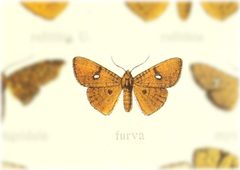
2- Banisia furva
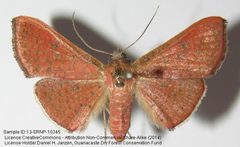
- Banisia myrsusalis(sapodilla borer)
Banisia is a of in the Thyrididae, established by Walker in 1863. The genus is classified within the Striglininae and contains approximately 12 described distributed across tropical and subtropical regions. Species within this genus exhibit the characteristic wing patterns and typical of thyridid moths, including intricate reticulate or banded forewing markings. The genus has been documented from Africa, Asia, and Indian Ocean islands including the Seychelles.
Pronunciation
How to pronounce Banisia: /bæˈnɪʒiə/
These audio files are automatically generated. While they are not always 100% accurate, they are a good starting point.
Identification
Distinguished from other Striglininae by combinations of wing pattern elements, particularly the arrangement of transverse lines and the presence or absence of discal markings on the forewing. The genus Rhodoneura and related thyridid genera may appear similar; Banisia often show more regular, geometric pattern organization. Examination of genitalia is typically required for definitive species-level identification. The specific epithet myrtaea (Drury, 1773) refers to one of the earliest described and most widespread species.
Images
Habitat
Tropical and subtropical forested environments; specific microhabitat preferences vary by . Some species have been recorded from coastal including atolls. Larval plants are poorly documented but likely include woody dicotyledons typical of thyridid feeding habits.
Distribution
Old World tropics and subtropics. Documented from: Africa (including Seychelles and Aldabra Atoll), South and Southeast Asia, and Indian Ocean islands. The shows an Afro-tropical and Oriental distribution pattern with some insular .
Seasonality
activity patterns vary by region; tropical likely fly year-round with possible peaks during wet seasons. Specific phenological data are sparse for most species.
Life Cycle
Complete with , larva, pupa, and stages. Larval and are poorly documented for most . likely occurs in silken cocoons or within leaf litter, typical of the .
Behavior
are and attracted to light. Resting posture typically with wings folded roof-like over the body or slightly spread, displaying the forewing pattern. Specific behavioral observations are limited in published literature.
Ecological Role
likely serve as prey for including bats and birds. Larval herbivory contributes to nutrient cycling in forest , though specific ecological impacts are unstudied.
Human Relevance
No documented economic importance. Occasionally encountered by collectors and in biodiversity surveys of tropical forests. Some described from remote localities (e.g., Aldabra Atoll) have contributed to understanding of insular lepidopteran .
Similar Taxa
- RhodoneuraOverlaps in distribution and general wing pattern style; distinguished by differences in forewing venation and male genitalia structure.
- StriglinaAlso in Striglininae; Striglina often show more uniform wing coloration and reduced pattern complexity compared to Banisia.
- HypolamprusSimilar size and ; Hypolamprus frequently exhibits more contrasting light-and-dark wing patterns with less intricate line systems.
More Details
Taxonomic History
The was established by Francis Walker in 1863. Several were originally described in other genera (including Drepana and Siculodes) and later transferred to Banisia. Whalley (1971) revised several African and Oriental species, clarifying boundaries with related genera.
Insular Endemism
Banisia aldabrana and B. tibiale were described from Aldabra Atoll in the Seychelles, indicating diversification on isolated oceanic islands. These restricted distributions may reflect limited ability or specific requirements.