
Aglossa pinguinalis
(Linnaeus, 1758)
Large Tabby, Grease Moth
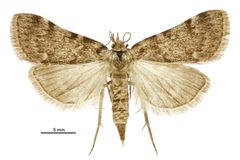
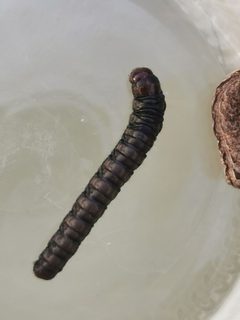
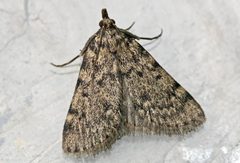
Aglossa pinguinalis is a pyralid commonly known as the large tabby or grease moth. The exhibits a rare feeding strategy among Lepidoptera: , with larvae consuming animal . Larval development spans approximately two years, and the species shows strong affinity for caves and sheltered environments. It is native to the Palearctic region but has been introduced to North America and New Zealand.
Pronunciation
How to pronounce Aglossa pinguinalis: /əˈɡlɒsə ˌpɪŋɡwɪˈneɪlɪs/
These audio files are automatically generated. While they are not always 100% accurate, they are a good starting point.
Identification
Distinguished from similar pyralid moths by the combination of: densely sprinkled dark fuscous forewings with obscure paler transverse lines; blackish subbasal line; dark fuscous discal spot; and larger female size. The specific epithet and 'grease moth' historically referred to larval feeding on animal fats, though this has been superseded by documented . Similar Aglossa may be distinguished by forewing pattern details and size.
Images
Habitat
Larvae occur primarily in caves, where abundance is approximately 700 times higher than in open field conditions. Also found in silken galleries constructed among chaff and hay refuse. presumably occur in vicinity of larval .
Distribution
Native to the Palearctic region. Introduced to North America and New Zealand. GBIF records confirm presence in Belgium.
Diet
Larvae are , feeding on animal . Observational evidence indicates 98% of larvae in caves fed on excrement, with 2% consuming decayed mushrooms; no plant detritus consumption was recorded. Experimental studies with dog and sheep excrement confirmed feeding without preference between types. Historical reports of larval feeding on animal fats appear to be superseded or mischaracterized.
Life Cycle
Larval development requires two years to complete. Larvae construct silk tubes connecting food sources with shelter chambers.
Behavior
Larvae construct silk tubes or galleries that connect feeding sites to shelter chambers. Strong selection for cave environments, likely reflecting competition and avoidance. No parental care observed.
Ecological Role
decomposer in cave . Specialized exploitation of nutrient-poor, competition-reduced environments.
Human Relevance
'grease moth' derives from historical association with stored animal fats and oily materials. May occur in stored products or agricultural settings with hay and chaff. Introduced to multiple regions outside native range.
Similar Taxa
- Aglossa caprealisCongeneric pyralid with similar size and general appearance; distinguished by forewing pattern details including line configuration and discal spot characteristics.
- Bradypodicola spp.Other pyralid moths with specialized ; ecologically similar trophic specialization but associated with sloth rather than cave environments.
- Cryptoses spp.Other pyralid moths with specialized ; ecologically similar trophic specialization but associated with sloth in buried contexts.
Misconceptions
Historical 'grease moth' and reports of larval feeding on animal fats appear to be partially mischaracterized; primary feeding strategy is ( consumption), not grease or fat consumption. The name may reflect incidental association with stored products rather than primary diet.
More Details
Research significance
One of few documented cases of in Lepidoptera outside the specialized sloth- mutualism (Bradypodicola and Cryptoses). Serves as model for understanding ecological constraints on coprophagy evolution in moths.
Habitat selection hypothesis
Authors hypothesize that Lepidoptera are restricted to competition- and -free (caves, animal burrows) due to lack of parental care and slow growth rates preventing competition with other coprophagous in exposed environments.