
Sciota celtidella
(Hulst, 1890)
Hackberry Leafroller Moth
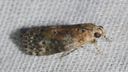
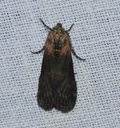
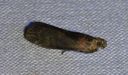
Sciota celtidella, commonly known as the Hackberry Leafroller , is a small pyralid moth in the Phycitinae. The is known to occur in eastern North America and is associated with hackberry (Celtis) plants. Larvae are leafrollers that feed on hackberry foliage, constructing shelters by rolling or tying leaves together.
Pronunciation
How to pronounce Sciota celtidella: //saɪˈoʊtə sɛlˈtɪdɛlə//
These audio files are automatically generated. While they are not always 100% accurate, they are a good starting point.
Identification
The Sciota is characterized by relatively small size and association with woody plants. S. celtidella can be distinguished from congeneric by host plant specificity to Celtis species and geographic distribution. Accurate identification typically requires examination of genitalia or molecular analysis.
Images
Habitat
Associated with hackberry trees (Celtis spp.) in deciduous woodlands, forest edges, and urban areas where plants occur.
Distribution
Eastern North America; specific range boundaries not precisely documented but includes regions where hackberry is native.
Seasonality
period and larval activity timing not well documented; likely follows typical temperate with adult in spring or summer.
Diet
Larvae feed on hackberry (Celtis spp.) leaves, specifically rolling or tying leaves together to form feeding shelters.
Host Associations
- Celtis - larval Hackberry trees; larvae are leafrollers on this
Life Cycle
Complete with , larva, pupa, and stages. Larvae construct leaf rolls on hackberry for shelter and feeding. Specific details of developmental timing and stage not documented in available sources.
Behavior
Larvae exhibit leaf-rolling , tying hackberry leaves together with silk to create protected feeding shelters. behavior poorly documented.
Ecological Role
Herbivore on hackberry; serves as prey for and . The has been documented as prey for the mason wasp Monobia quadridens, which provisions nests with caterpillars including Sciota uvinella and related leafroller species.
Human Relevance
Minor economic significance; hackberry leafrollers may cause aesthetic damage to ornamental hackberry trees but are generally not considered serious pests. The contributes to biodiversity documentation and ecological studies.
Similar Taxa
- Sciota uvinellaAlso a hackberry-feeding leafroller ; S. celtidella distinguished by specific associations and subtle morphological differences typically requiring expert examination
- Other Phycitinae leafrollersMany in this exhibit similar leaf-rolling larval and small size; identification requires plant records or detailed morphological analysis
More Details
Taxonomic note
Originally described as Salebria celtidella by Hulst in 1890; later transferred to Sciota. The genus Sciota is part of the diverse Phycitinae , which contains many small with concealed feeding larvae.
Predator documentation
The has been indirectly referenced in ecological studies through documentation of its Sciota uvinella (Sweetgum Leafroller) as prey for the mason wasp Monobia quadridens. This suggests S. celtidella likely shares similar relationships.