
Laetilia coccidivora
Comstock, 1879
scale-feeding snout moth, Scale-feeding Snout
Laetilia coccidivora is a small pyralid whose larvae are specialized of scale insects ( Coccidae). First described by Comstock in 1879, it occurs in the southern United States and has been documented in Mexico preying on . The is notable among Lepidoptera for its entomophagous diet and use of sequestered carminic acid from its prey for chemical defense.
Pronunciation
How to pronounce Laetilia coccidivora: /laɪˈtɪliə kɒksɪdɪˈvɔːrə/
These audio files are automatically generated. While they are not always 100% accurate, they are a good starting point.
Identification
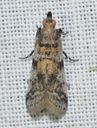
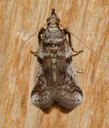
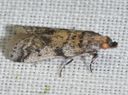
Distinguished from other small pyralid moths by its association with insect colonies and predatory larval . are small (10–17 mm wingspan) with typical snout moth . Definitive identification may require examination of larval behavior or association. Similar Laetilia may occur in overlapping ranges; precise identification to species level may require genitalia dissection or molecular analysis.
Images
Habitat
Associated with supporting of soft scale insects (Coccidae), including ornamental and native trees. Documented on pines (Pinus spp.) infested with Toumeyella pini in the United States, and on Acacia farnesiana in Mexico. Occurs in both natural and anthropogenic environments where scale insects are present.
Distribution
Southern United States: California, Florida, Maryland, North Carolina, Ohio, Oklahoma, Texas, and West Virginia. Mexico: Guanajuato state (Cortazar municipality), with first documented record in 2023.
Diet
Larvae are obligate of scale insects ( Coccidae). Prey include Toumeyella pini (Striped Pine Scale) in the United States and in Mexico. Larvae feed on and stages of scale insects. : feeding habits not documented.
Host Associations
- Toumeyella pini - preyStriped Pine Scale; female consumed by larvae
- Coccus pseudomagnoliarum - preySoft insect; first Mexican record documented in Guanajuato
- Acacia farnesiana - indirect plant of prey in Mexico
Life Cycle
Complete with , larva, pupa, and stages. Larvae are the active predatory stage. Specific details on egg deposition sites, location, or number of per year are not documented in available sources.
Behavior
Larvae exhibit high voracity, significantly reducing local of scale insects. Sequesters carminic acid from insect prey for use as a chemical defense against its own . This represents a rare case of defensive compound acquisition through in Lepidoptera.
Ecological Role
and regulator of soft scale insects (Coccidae). Acts as a agent, with potential for reducing pest . Transfers carminic acid from scale insects into , potentially affecting predator-prey dynamics at higher .
Human Relevance
Potential agent for pest scale insects affecting ornamental and timber trees. No documented negative impacts; beneficial for management of insect pests.
Similar Taxa
- Other Laetilia species Laetilia contains multiple ; identification requires detailed examination. L. coccidivora is distinguished by documented -feeding and geographic distribution.
- Other Phycitinae larvaeMany pyralid larvae are phytophagous or feed on stored products; L. coccidivora is distinguished by its specialized entomophagous diet on scale insects.
More Details
Chemical defense
Laetilia coccidivora is one of few Lepidoptera known to sequester defensive compounds from animal prey. Carminic acid, obtained from scale insects, provides protection against .
Taxonomic history
Described by John Henry Comstock in 1879, a prominent American entomologist known for foundational work in economic entomology and insect anatomy.