
Laetilia
Ragonot, 1889
Scale-eating Moths
Species Guides
5- Laetilia coccidivora(scale-feeding snout moth)
- Laetilia dilatifasciella(Western Scale-feeding Snout)
- Laetilia fiskeella
- Laetilia myersella
- Laetilia zamacrella(Monterey Scale-feeding Snout)
Laetilia is a of snout moths in the Pyralidae, Phycitinae, described by Émile Louis Ragonot in 1889. The genus contains approximately 16 described distributed across North America and other regions. Laetilia species are notable for their entomophagous lifestyle, with larvae feeding primarily on scale insects (Coccoidea), a trait that has earned them the "-eating ." This specialized predatory makes them of interest for of scale insect pests.
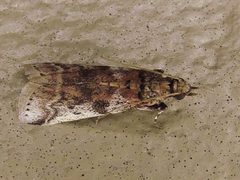
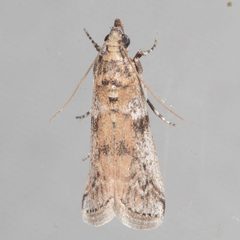
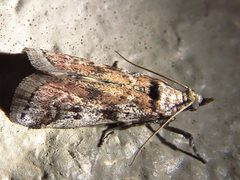
Pronunciation
How to pronounce Laetilia: /laɪˈtɪliə/
These audio files are automatically generated. While they are not always 100% accurate, they are a good starting point.
Identification
Identification of Laetilia requires examination of genitalia and wing pattern characteristics. The is distinguished from other Phycitinae by a combination of morphological features, though specific diagnostic traits are not detailed in available sources. Larvae can be recognized by their association with insect colonies and predatory on soft scales.
Images
Habitat
are defined by the presence of plants supporting insect . Documented associations include pine trees (Pinus spp.) infested with Toumeyella pini, and Acacia farnesiana supporting . The occurs in both natural and ornamental plantings where scale insects establish colonies.
Distribution
occur in North America (United States, Canada, Mexico), with records from Colorado, Georgia, and Guanajuato state in Mexico. The has been introduced or naturally occurs in regions where suitable insect prey and plants are present.
Diet
Larvae feed on scale insects (Coccoidea), including soft scales such as and Toumeyella pini. Larvae have been observed feeding occasionally on flowers of -infested plants, though this appears secondary to on scales.
Host Associations
- Coccus pseudomagnoliarum - preySoft insect; first record of this -prey association in Mexico
- Toumeyella pini - preyStriped Pine Scale; documented prey of Laetilia coccidivora in North America
- Acacia farnesiana - indirect plant of , supporting that serve as larval food
- Pinus spp. - indirect trees of Toumeyella pini, supporting preyed upon by larvae
Life Cycle
Complete with , larval, pupal, and stages. Larvae are the active predatory stage, consuming scale insects. Specific details on egg laying, sites, and adult longevity are not documented in available sources.
Behavior
Larvae are voracious of scale insects. In feeding trials, larval voracity considerably reduced numbers of available insect prey. This predatory represents an unusual dietary strategy within Lepidoptera, which are predominantly herbivorous as larvae.
Ecological Role
of phytophagous scale insects (Coccoidea). Functions as a natural agent, potentially limiting insect growth on plants. The specialized predatory lifestyle fills a in involving sap-feeding Hemiptera and their natural enemies.
Human Relevance
Potential value as agents for insect pests in forestry and horticulture. Laetilia coccidivora has been documented reducing of economically significant scale including Toumeyella pini on ornamental pines. No negative impacts on human activities are recorded.
Similar Taxa
- Other Phycitinae generaMany Phycitinae are herbivorous seed or fruit feeders; Laetilia is distinguished by entomophagous larval diet specializing on scale insects
- Other scale-feeding LepidopteraFew Lepidoptera are predatory on scale insects; Laetilia represents a specialized lineage within Pyralidae with this habit
More Details
Taxonomic history
The was established by Émile Louis Ragonot in 1889. have been described by multiple authors including Dyar, Meyrick, Neunzig, and others through 1997.
Notable species
Laetilia coccidivora is the best-documented , with records of on multiple insect species across North America and Mexico. The specific epithet 'coccidivora' translates to 'scale-eater', reflecting its diet.