Hypsipyla
Ragonot, 1888
Species Guides
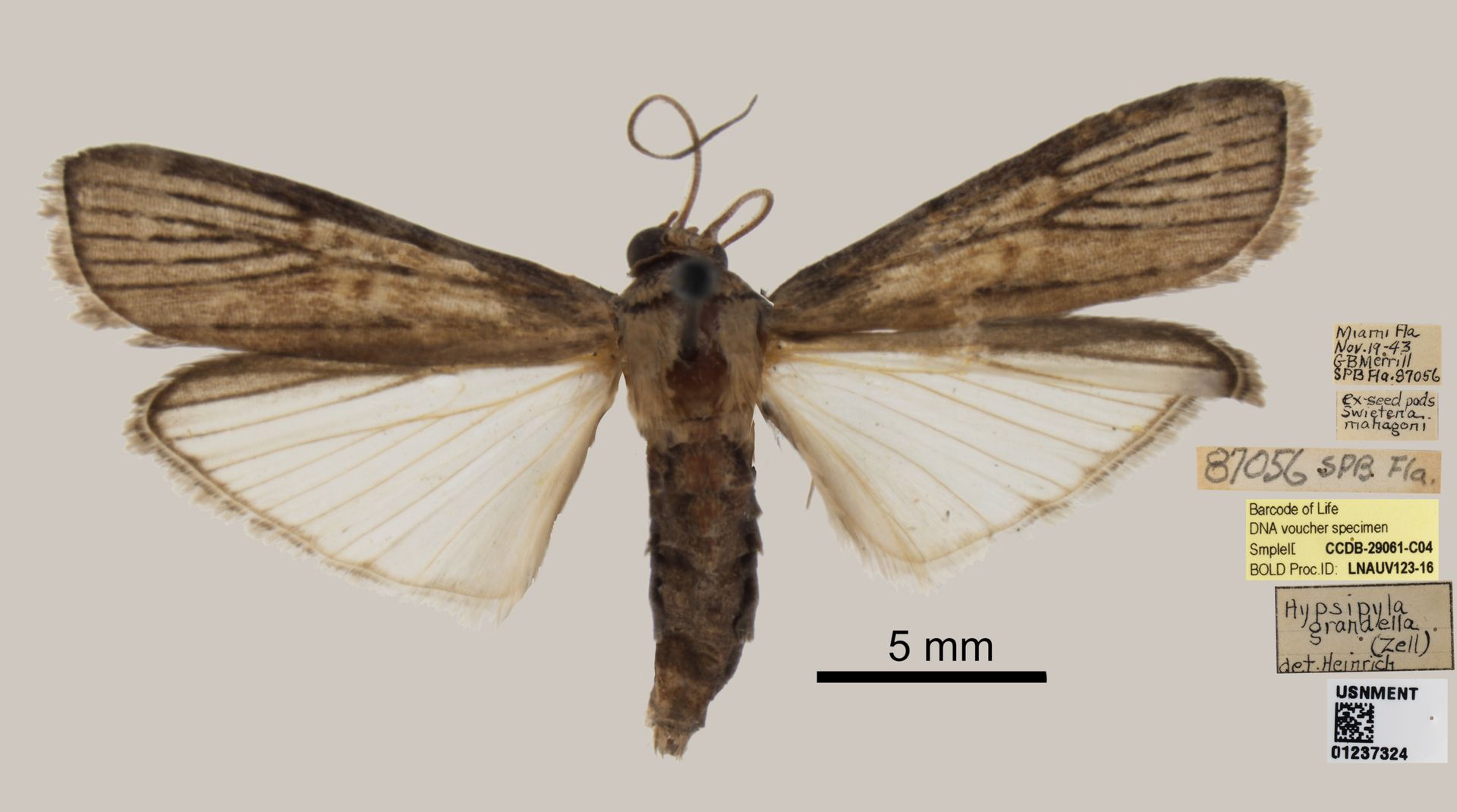
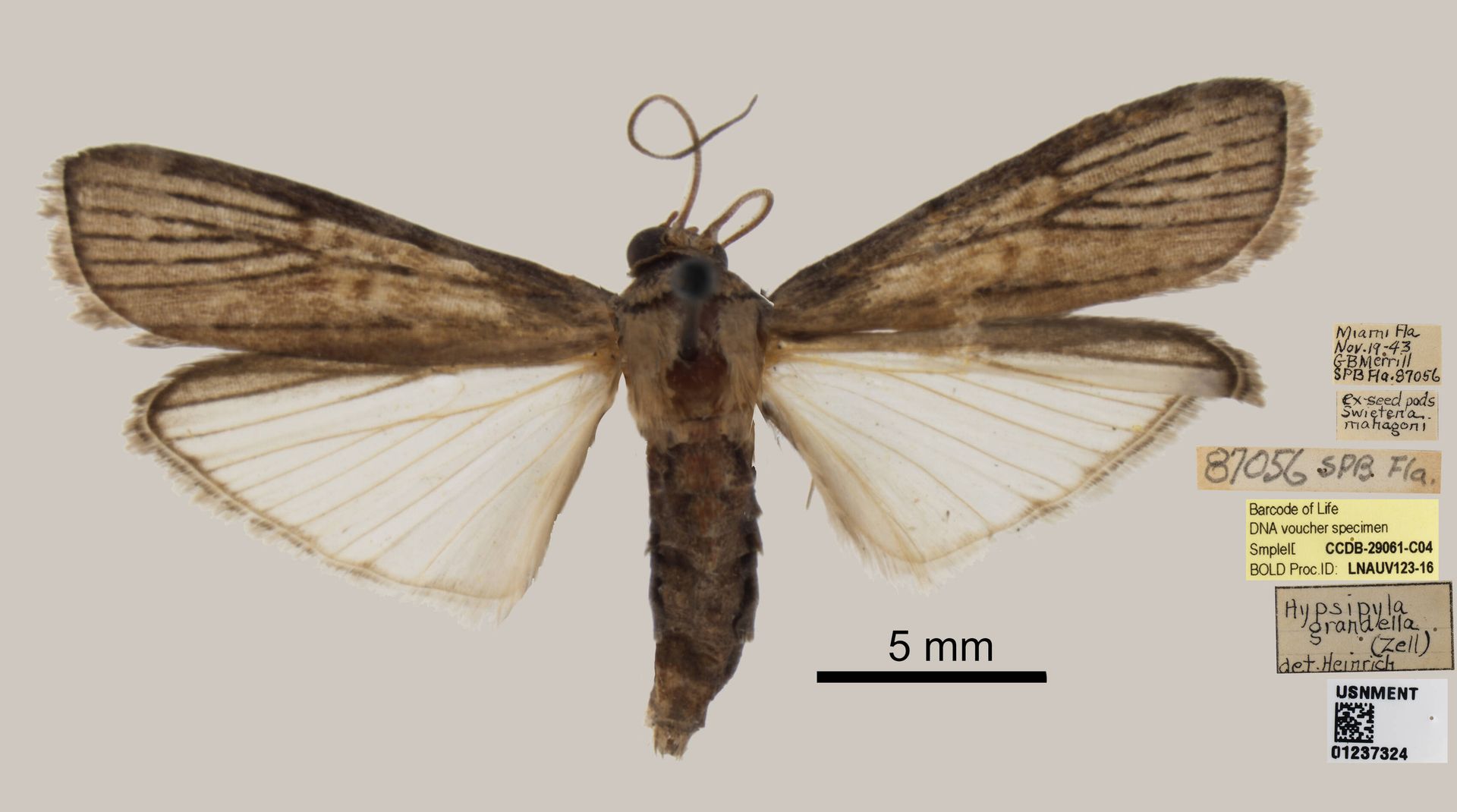
1- Hypsipyla grandella(Mahogany Shoot Borer)
Hypsipyla is a of snout moths ( Pyralidae, Phycitinae) established by Ragonot in 1888. The genus contains approximately 11 described distributed across tropical and subtropical regions. Several species, notably H. robusta and H. grandella, are economically significant pests of Meliaceae trees including mahogany (Swietenia), Spanish cedar (Cedrela), and Toona. These shoot borers attack shoots, causing growth deformities and substantial economic losses in forestry plantations.
Pronunciation
How to pronounce Hypsipyla: //hɪpˈsɪpɪlə//
These audio files are automatically generated. While they are not always 100% accurate, they are a good starting point.
Identification
-level identification within Hypsipyla requires examination of genitalia and wing pattern details; external alone is generally insufficient for reliable differentiation. The can be distinguished from related phycitine genera by a combination of genitalic characters and forewing pattern elements, though specific diagnostic features for the genus as a whole are not well-documented in accessible literature.
Images
Habitat
Found in tropical and subtropical forest , particularly in association with trees in the Meliaceae. Occurs in both natural forests and plantation settings where mahogany, Spanish cedar, Toona, and related are cultivated.
Distribution
Pantropical distribution spanning the Americas, Africa, Asia, and Australasia. H. grandella occurs from Mexico and the southern United States through Central America, the Caribbean, and South America (Argentina to Venezuela). H. robusta is distributed across South and Southeast Asia (India, Myanmar, Indonesia, Malaysia, Pakistan, Singapore, Sri Lanka), parts of Africa (Ghana, Madagascar, Malawi, Mauritius, Nigeria, Sierra Leone, Tanzania, Uganda), and Australasia (Australia, Papua New Guinea, Solomon Islands).
Seasonality
In West Java, H. robusta exhibits year-round activity with peak attack rates observed in March. Multiple overlapping occur within a single year, with various larval instars present simultaneously indicating non-uniform development.
Diet
Larvae are feeders on Meliaceae, boring into shoots, stems, and fruits of trees. Documented hosts include Swietenia macrophylla, S. mahagoni, Cedrela odorata, Toona ciliata, Khaya senegalensis, K. grandifoliola, and related .
Host Associations
- Swietenia macrophylla - larval big-leaf mahogany
- Swietenia mahagoni - larval American mahogany
- Cedrela odorata - larval Spanish cedar
- Toona ciliata - larval Australian red cedar, Toon
- Khaya senegalensis - larval African mahogany
- Khaya grandifoliola - larval African mahogany
Life Cycle
H. robusta completes one in 5–8 weeks under field conditions in West Java. Multiple overlapping generations occur annually. Larvae bore into shoots, with various instars present simultaneously indicating asynchronous development. occurs within the tunnelled shoots.
Behavior
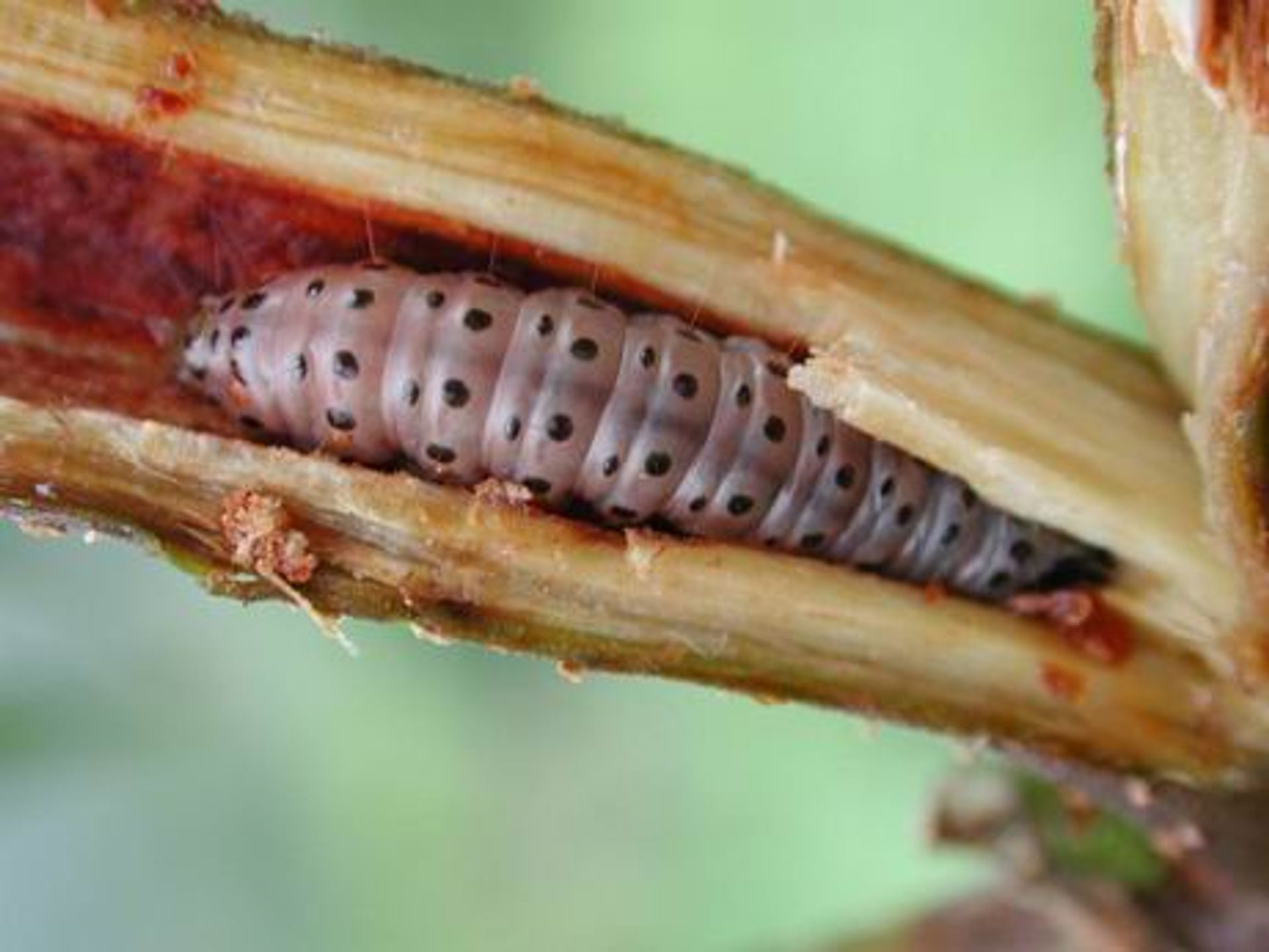
possess well-developed chemoreception enabling location of isolated and distant trees. Larvae tunnel into shoots, creating holes filled with powdery from larval secretions. Repeated attacks on individual trees are common, with rates up to 7 attacks per tree per year documented; average attack frequency is 2–4 times per tree per year. Attack patterns are not influenced by weather conditions. Attacks result in shoot death and proliferation of multiple lateral shoots (multishooting), causing growth deformities.
Ecological Role
As a herbivore on Meliaceae, Hypsipyla influence tree growth form and survival. creates entry points for secondary fungal including Rhizoctonia sp., Colletotrichum sp., and Fusarium sp., which cause leaf blight and twig dieback. The species serves as host for fungi including tenella.
Human Relevance
Major economic pest of high-value timber trees in the mahogany , causing significant losses in plantation forestry throughout the tropics. Chemical control efforts spanning eight decades and more than 23 countries have failed to provide reliable, cost-effective, environmentally sound protection for marketable stem production. Management relies on combining nursery protection, microbial (viruses, bacteria, fungi, ), and potential use of for survey and suppression. Research continues on agents and varieties.
Similar Taxa
- Other Phycitinae generaSimilar external ; Hypsipyla distinguished by genitalic characters and association with Meliaceae
More Details
Taxonomic note
The Hypsipyla is classified in Phycitinae within Pyralidae. boundaries require careful examination of male and female genitalia.
Economic impact
H. robusta and H. grandella are considered among the most serious obstacles to commercial plantation establishment of Meliaceae worldwide. The inability to achieve reliable chemical control has driven extensive research into alternative management strategies.
Sources and further reading
- BugGuide
- Wikipedia
- GBIF taxonomy match
- iNaturalist taxon
- NCBI Taxonomy
- Catalogue of Life
- Hypsipyla grandella . [Distribution map].
- Hypsipyla robusta . [Distribution map].
- Hypsipyla grandella . [Distribution map].
- Biology and dynamics Hypsipyla robusta (Moore) (Lepidoptera: Pyralidae)
- Taxonomy, Ecology, and Control of Hypsipyla Shoot Borers of Meliaceae
- The biology and host relations of the red cedar tip moth Hypsipyla robusta Moore (Lepidoptera: Pyralidae) in Australia
- Effects of plants grown under low light conditions and plant host resistance status on the behaviour of Hypsipyla robusta Moore (Lepidoptera: Pyralidae) during early stages of attack on species of Meliaceae
- Host Preferences of Hypsipyla robusta (Moore) (Lepidoptera: Pyralidae) in West Java
- Hypsipyla robusta moore, a new host for Beauveria tenella (Delacroix) siemaszko
- Antifungal Effects of Senescence Terminalia Cattappa Leaves Extract on Disease Pathogens Associated With the Infestation of Hypsipyla robusta on Khaya grandifoliola
- Meliaceae shoot borer - Hypsipyla robusta Moore and its integrated management