
Lampronia
Stephens, 1829
currant moths, shoot borers
Species Guides
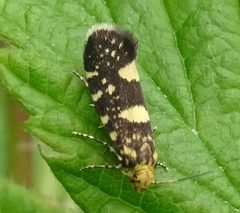
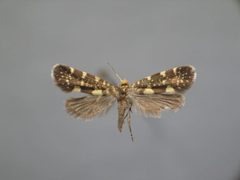
5Lampronia is a of small in the Prodoxidae with a Holarctic distribution. The genus contains approximately 25 described , with additional undescribed species in North America, Japan, and Iran. Several species are economically significant pests of cultivated currants (Ribes spp.), particularly in northern Europe. Most species are in habit.
Pronunciation
How to pronounce Lampronia: //læmˈproʊniə//
These audio files are automatically generated. While they are not always 100% accurate, they are a good starting point.
Identification
Lampronia are small that can be distinguished from related prodoxid by genitalic characters and larval associations. are typically small with narrow wings. Species-level identification requires examination of genitalia or association with specific host plants. Larvae are internal feeders in shoots or buds of Ribes, distinguishing them from external-feeding relatives.
Images
Habitat
supporting Ribes (currant and gooseberry) plants, including cultivated orchards and wild . Larvae develop within plant shoots; pupae overwinter in soil. Agricultural habitats with black currant (Ribes nigrum) are primary habitat for pest in northern Europe.
Distribution
Holarctic distribution, with records from northern Europe (Denmark, Norway, Sweden, Finland), North America (including Vermont, USA), Japan, and Iran. Specific distribution varies by .
Seasonality
period typically occurs from May to August, with peak activity in June–July. Flight timing is synchronized with plant , beginning shortly after black currant flowering ends. Duration of flight period approximately three weeks for individual .
Diet
Larvae feed internally on Ribes (currant and gooseberry) , boring into shoots and buds. Specific documented include black currant (Ribes nigrum), raspberry (Rubus idaeus), and other Ribes species.
Host Associations
- Ribes nigrum - larval black currant; primary for pest in northern Europe
- Ribes spp. - larval currants and gooseberries
- Rubus idaeus - larval raspberry; documented for L. corticella
- Panteles schnetzeanus - ichneumonid of L. fuscatella
Life Cycle
Overwinters as pupae in soil. emerge when plant leaves unfold, with synchronized to host . Females carry average supply of 107 eggs; oviposition begins 2–5 days after emergence. Eggs laid in batches of 4–7 on young leaves, petioles, shoot tips, and fruitlets. Approximately 60% of eggs deposited on first day of oviposition period. Larvae bore into shoots causing internal feeding damage.
Behavior
Most are day-flying (). is tightly synchronized with plant leaf unfolding. Larvae exhibit boring , entering host shoots to feed internally. Females exhibit concentrated oviposition pattern with majority of laid early in reproductive period.
Ecological Role
Herbivore specializing on Ribes . Pest reduce yield and damage shoots in cultivated currant operations. Serves as for including Panteles schnetzeanus.
Human Relevance
Lampronia capitella (currant shoot borer) and L. corticella are minor agricultural pests on raspberry and currant crops in Europe. cause shoot damage and yield reduction in commercial black currant fields. -baited traps are used for monitoring and predicting pest pressure. Larval boring damage can be economically significant in northern European currant .
Similar Taxa
- Euhyponomeutoides albithoracellusalso a currant pest in northern Europe; distinguished by different damage (bud moth vs. shoot borer) and
- Synanthedon tipuliformiscurrant clearwing moth, co-occurring pest on black currant; distinguished by clear wings and different larval feeding habits
- Incurvariarelated in Incurvariidae (historically or alternatively placed); distinguished by larval case-building and different associations
More Details
Taxonomic placement
Lampronia has been placed in both Prodoxidae and Incurvariidae in different classifications. Current sources (Catalogue of Life, NCBI, iNaturalist) place it in Prodoxidae, though some literature references retain Incurvariidae placement.
Species diversity
Approximately 25 described exist, with undescribed diversity in North America, Japan, and Iran indicating the is more diverse than currently recognized.
Sources and further reading
- BugGuide
- Wikipedia
- GBIF taxonomy match
- iNaturalist taxon
- NCBI Taxonomy
- Catalogue of Life
- Oviposition and flight period of the currant shoot borer Lampronia capitella
- Biology and immature stages ofPanteles schnetzeanus(Hymenoptera: Ichneumonidae), a parasitoid ofLampronia fuscatella(Lepidoptera: Incurvariidae)
- Geographic Distribution, Flight Phenology and Infestation Level of the Lepidopteran Pests Euhyponomeutoides albithoracellus , Lampronia capitella and Synanthedon tipuliformis on Black Currants in Northern Europe