
Homoeosoma impressalis
Hulst, 1886
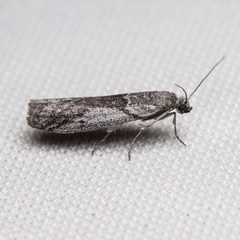
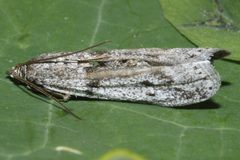
Homoeosoma impressalis is a of snout moth in the Pyralidae, described by George Duryea Hulst in 1886. It belongs to the Homoeosoma, which contains several species associated with sunflower and other composite plants. The species is found in western North America, specifically in Arizona and California. Like other members of its genus, it is likely associated with plants in the Asteraceae family, though specific ecological details remain poorly documented.
Pronunciation
How to pronounce Homoeosoma impressalis: /hoʊˌmiːəˈsoʊmə ˌɪmprɪˈseɪlɪs/
These audio files are automatically generated. While they are not always 100% accurate, they are a good starting point.
Identification
Distinguished from the closely related and economically important sunflower moth (Homoeosoma electellum) by geographic distribution—H. impressalis is restricted to Arizona and California, whereas H. electellum occurs more broadly across North America including Texas and the Great Plains. The two may be difficult to separate morphologically without examination of genitalia or other fine structural characters. Within its range, it may be confused with other small pyralid moths associated with composite flowers.
Images
Habitat
Associated with regions where its plants occur. Based on recorded distribution, found in arid and semi-arid environments of the southwestern United States including desert and chaparral .
Distribution
Documented from Arizona and California in western North America. Not recorded from the central or eastern United States where congeneric are more commonly encountered.
Similar Taxa
- Homoeosoma electellumThe sunflower moth is the most economically important congeneric , causing significant damage to commercial sunflower crops. It differs in broader geographic distribution (Texas, Great Plains, and throughout North America) and is well-documented as a pest, whereas H. impressalis has no recorded pest status.
More Details
Taxonomic Note
The epithet has appeared in some sources as 'impressale' rather than 'impressalis'. Hulst's original 1886 description established the name as Homoeosoma impressalis. The Homoeosoma currently contains approximately 50 described species worldwide, with several North American species being associated with sunflower and other Asteraceae.
Data Deficiency
This is notably data-deficient compared to the well-studied Homoeosoma electellum. The 16 observations recorded on iNaturalist suggest it is encountered infrequently or is underreported, possibly due to its restricted range, cryptic habits, or confusion with related species.