
Dioryctria cambiicola
(Dyar, 1914)
Western Pine Moth
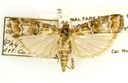
Dioryctria cambiicola, commonly known as the western pine , is a of snout moth in the Pyralidae. First described by Harrison Gray Dyar Jr. in 1914, this species is native to western North America. The Dioryctria includes coneworm moths whose larvae typically feed within conifer cones, though some species feed in foliage shoots or under bark. are small moths, measuring 10–15 mm in length.
Pronunciation
How to pronounce Dioryctria cambiicola: /di.oˈrɪk.tri.ə kæmˈbiː.kə.lə/
These audio files are automatically generated. While they are not always 100% accurate, they are a good starting point.
Identification
Members of the Dioryctria can be recognized by their small size (10–15 mm), slender bodies, and wings often held rolled around the body at rest. The labial palps are enlarged, heavily scaled, and project forward to form a distinct 'snout' characteristic of snout moths (Pyralidae). Specific identification of D. cambiicola likely requires examination of genitalic characters or geographic context, as within Dioryctria are morphologically similar.
Images
Distribution
Found in western North America from British Columbia and Alberta south to California and New Mexico. The occurs in coniferous forest within this range.
Host Associations
- Pinus - larval Larvae of Dioryctria typically feed in conifer cones, foliage shoots, or under bark; specific records for D. cambiicola not confirmed in sources
Behavior
are attracted to lights at night. Larvae are concealed feeders, developing within conifer cones or under bark, which makes them difficult to detect and control with .
Ecological Role
Larvae function as herbivores in coniferous forest . The serves as a for , including Baryscapus dioryctriae, which has been studied as a potential agent for related Dioryctria species.
Human Relevance
in the Dioryctria are considered serious pests of pine trees, with larvae damaging cones and shoots. While D. cambiicola specifically is not well-documented as a major pest, related species such as D. pryeri and D. abietella cause significant economic damage in managed pine forests. The concealed feeding habit of larvae makes chemical control generally ineffective, increasing interest in approaches.
Similar Taxa
- Dioryctria auranticellaAlso a coneworm in the same with similar and appearance; are difficult to distinguish without close examination
- Dioryctria abietellaClosely related coneworm with overlapping geographic range and similar larval habits in conifer cones
- Dioryctria pryeriAnother coneworm in the same , known pest of pine trees in Asia, targeted by same agents
More Details
Original Description
First described by Harrison Gray Dyar Jr. in 1914 under the basionym Pinipestis cambiicola.
Related Research
The Baryscapus dioryctriae has been discovered in China as a natural enemy of Dioryctria , with potential for applications.
Sources and further reading
- BugGuide
- Wikipedia
- GBIF taxonomy match
- iNaturalist taxon
- NCBI Taxonomy
- Catalogue of Life
- Baryscapus dioryctriae Archives - Entomology Today
- Baryscapus dioryctriae - Entomology Today
- Bug Eric: New Mexico Night Bugs
- Bug Eric: My Personal National Moth Week, 2017
- Bug Eric: September 2017
- New Wasp Species Discovered Parasitizing Pests of Pine Trees