
Apomyelois bistriatella
Hulst, 1887
Heath Knot-horn
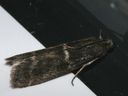
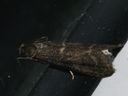
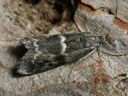
A small pyralid (wingspan 15–25 mm) with a circumpolar distribution across North America and northern Eurasia. are active from May to September, with peak in June–July. Larvae are specialized fungivores that develop within Daldinia and Hypoxylon fungi growing on burnt or dead woody plants, particularly gorse and birch. Colonies are ephemeral and shift location based on the availability of suitable fungi.
Pronunciation
How to pronounce Apomyelois bistriatella: /ˌæp.oʊ.maɪˈel.ɔɪs ˌbɪs.triː.əˈtɛl.ə/
These audio files are automatically generated. While they are not always 100% accurate, they are a good starting point.
Images
Habitat
Woodland and heathland , particularly those with burnt gorse (Ulex europaeus) or young birch (Betula). Also associated with recently killed oak (Quercus) and poplar (Populus). The depends on the presence of specific wood-decay fungi on fire-damaged or dead wood.
Distribution
Circumpolar across North America (California, eastern United States) and northern Eurasia (British Isles, northern Europe, Russia to Hokkaido, Japan). In Europe represented by neophanes; distribution in the British Isles is scattered.
Seasonality
fly May through September, with peak activity June–July. Larvae feed August–October.
Diet
Larvae feed within the fruiting bodies of fungi, specifically Daldinia vernicosa (also known as D. concentrica) and Hypoxylon occidentale. These fungi grow on burnt gorse and dead or dying birch, oak, and poplar.
Host Associations
- Daldinia vernicosa - larval food sourcefungus on burnt gorse and dead birch
- Daldinia concentrica - larval food sourcesynonym or closely related fungus
- Hypoxylon occidentale - larval food sourcerecorded in California
- Hypoxylon - larval food source of fungi
- Ulex europaeus - substrateburnt gorse supports fungal
- Betula - substrateyoung or dead birch
- Quercus - substraterecently killed oak
- Populus - substraterecently killed poplar
Life Cycle
laid on or near fungi. Larvae feed within fungal fruiting bodies August–October, then overwinter in dead wood or within the fungus. occurs in May. emerge May–September.
Behavior
are . By day they rest on tree trunks with the raised away from the body and forewing tips pressed against the substrate. Colonies are ephemeral; relocate according to the availability of young birch and burnt gorse supporting suitable fungi.
Ecological Role
Specialized fungivore. Larvae develop within wood-decay fungi that colonize fire-damaged or woody plants, contributing to nutrient cycling in disturbed woodland and heathland .