
Apomyelois
Heinrich, 1956
knot-horn moths
Species Guides
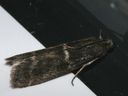
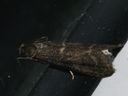
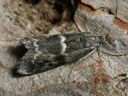
1- Apomyelois bistriatella(Heath Knot-horn)
Apomyelois is a of small pyralid moths in the Phycitinae, established by Carl Heinrich in 1956. The genus contains approximately six described with notably divergent ecologies: some are agricultural pests of stored products and fruit crops, while others are specialized fungus-feeders in woodland . Taxonomic boundaries remain contested, particularly regarding the placement of the carob , which some authorities classify as Ectomyelois ceratoniae.
Pronunciation
How to pronounce Apomyelois: //ˌæpoʊˈmaɪəˌlɔɪs//
These audio files are automatically generated. While they are not always 100% accurate, they are a good starting point.
Images
Habitat
varies substantially by . Apomyelois bistriatella occupies heathy woodland locations with young birch and burnt gorse, where larvae develop within fungal fruiting bodies. Apomyelois ceratoniae is associated with agricultural systems, infesting stored carob, pomegranate, and citrus products. Other species occupy intermediate or poorly documented habitats.
Distribution
A. bistriatella has a circumpolar distribution across North America and northern Eurasia, from the British Isles west to Hokkaido east, with scattered in the British Isles. Distribution records for the include Denmark, Norway, Sweden, and Vermont (USA). Distribution of other is insufficiently documented.
Seasonality
A. bistriatella fly from May through September, with larval feeding occurring August through October, followed by and in May. Seasonality of other is poorly documented.
Diet
Larvae of A. bistriatella feed internally within fungal fruiting bodies, specifically Daldinia concentrica in the British Isles and Hypoxylon fungi in North America. A. ceratoniae feeds on carob, pomegranate, and citrus. Diet of remaining is unknown.
Host Associations
- Daldinia concentrica - larval food sourceBritish Isles of A. bistriatella
- Hypoxylon fungi - larval food sourceNorth American of A. bistriatella
- Ulex europaeus - indicatorburnt gorse associated with A. bistriatella colonies
- Betula - indicatoryoung birches associated with A. bistriatella colonies
- carob (Ceratonia siliqua) - larval food sourceA. ceratoniae; also stored products
- pomegranate (Punica granatum) - larval food sourceA. ceratoniae
- citrus - larval food sourceA. ceratoniae
- date palm (Phoenix dactylifera) - larval food sourceA. ceratoniae; inferred from
Life Cycle
A. bistriatella: larvae feed August-October, overwinter in dead wood or fungus, pupate in May. A. ceratoniae: fifth instar larvae enter facultative as winter approaches, induced by short and low temperature. of other are unknown.
Behavior
A. bistriatella are , resting by day on tree trunks with raised away from body and forewing tips pressed against the substrate. Colonies are ephemeral and relocate according to availability of young birch and burnt gorse. A. ceratoniae exhibits high cold hardiness with supercooling points around -18°C; winter mortality is primarily from (56%) rather than cold temperatures.
Ecological Role
A. ceratoniae functions as a pest causing economic damage to stored products and fruit crops. A. bistriatella appears to be a specialized decomposer, with larvae consuming fungal tissue. The serves as for microsporidian including Nosema fumiferanae.
Human Relevance
A. ceratoniae (carob , date moth) is an economically significant pest of stored carob, pomegranate, citrus, and dates, requiring pest management in agricultural and post-harvest systems. A. bistriatella has no documented economic impact.
Similar Taxa
- DidiaFormerly included A. striatella, which has been transferred to Didia
- EctomyeloisTaxonomic synonymy disputed; some authorities place A. ceratoniae in Ectomyelois, others treat Ectomyelois as synonym of Apomyelois
More Details
Taxonomic instability
The generic placement of the carob remains contested. Some authorities maintain Ectomyelois as a separate , while others synonymize it with Apomyelois. This affects both and potentially concepts within the group.
Divergent ecologies
The encompasses strikingly different : from specialized fungus-feeders in natural woodland (A. bistriatella) to broad pests of stored agricultural products (A. ceratoniae). This ecological divergence may warrant future taxonomic revision.
Sources and further reading
- BugGuide
- Wikipedia
- GBIF taxonomy match
- iNaturalist taxon
- NCBI Taxonomy
- Catalogue of Life
- Overwintering biology of the carob mothApomyelois ceratoniae(Lepidoptera: Pyralidae)
- A new isolate ofNosema fumiferanae(Microsporidia: Nosematidae) from the date mothApomyelois(Ectomyelois)ceratoniae, Zeller, 1839 (Lepidoptera: Pyralidae)
- The genome sequence of the Heath Knot-horn, Apomyelois bistriatella (Hulst, 1887).