
Acrobasis indigenella
Zeller, 1848
Leaf Crumpler
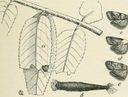
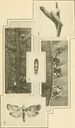
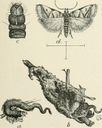
Acrobasis indigenella, the leaf crumpler, is a small snout moth (Pyralidae: Phycitinae) described by Zeller in 1848. It is known from eastern North America, with records extending into central Canada and the north-central United States. The has a in Illinois and the southeastern United States, with larvae that feed on leaves of Juglandaceae, particularly black walnut, hickories, and pecan. First- larvae are notable for skeletonizing leaves and webbing them together into shelters for feeding.
Pronunciation
How to pronounce Acrobasis indigenella: /ˌæ.krəˈbeɪ.sɪs ˌɪn.dɪ.dʒəˈnɛl.ə/
These audio files are automatically generated. While they are not always 100% accurate, they are a good starting point.
Identification
Distinguished from other Acrobasis by association with Juglandaceae (black walnut, hickory, pecan) and the characteristic 'leaf crumpling' of larvae, which skeletonize leaves and web them together into shelters. are small (15–20 mm wingspan) with typical snout moth . Specific wing pattern differences from are not well documented in available sources. May be confused with other leaf-tying Phycitinae, but host plant association provides a useful clue.
Images
Habitat
Deciduous forests and orchards containing trees in the Juglandaceae, specifically black walnut (Juglans nigra), hickory (Carya spp.), and pecan (Carya illinoensis). In central Illinois, occurs in wooded areas and commercial pecan plantings where these host trees are present.
Distribution
Eastern North America. Documented from central Illinois (detailed biological studies), with additional records from Alberta, Manitoba, and Saskatchewan in Canada, and Vermont in the United States. Distribution corresponds broadly with the range of its primary trees in the Juglandaceae.
Seasonality
(two per year) in central Illinois and the southeastern United States. First-generation emerge late May to early June; second-generation adults emerge late July to early August. Second-generation larvae overwinter, with occurring in spring. Specific timing varies with latitude and local climate conditions.
Diet
Larvae feed on leaves of Juglandaceae: black walnut (Juglans nigra), hickories (Carya spp.), and pecan (Carya illinoensis). First- larvae skeletonize living leaves and feed within webbed shelters. Second-generation larvae feed on fallen leaves. feeding habits not documented.
Host Associations
- Juglans nigra - larval black walnut; leaves used by first and second larvae
- Carya spp. - larval hickories; multiple used
- Carya illinoensis - larval pecan; important in commercial orchards and natural stands
Life Cycle
Two per year in central Illinois and southeastern United States. First generation: laid on leaf undersides, hatch in 4–6 days, larvae feed for 4–5 weeks skeletonizing leaves and webbing them together, pupate within leaf shelters for approximately 2 weeks, emerge late May to early June. Second generation: larvae develop in late summer, drop to ground with fallen leaves to overwinter, pupate in spring, adults emerge late July to early August. occurs in the larval stage.
Behavior
First- larvae are leaf skeletonizers that use silk to web leaves together into shelters for protection while feeding. This 'leaf crumpling' gives the its . Second-generation larvae overwinter in fallen leaf litter. are ; specific mate-finding or oviposition behaviors not documented beyond -laying on leaf undersides.
Ecological Role
Herbivore and leaf skeletonizer on Juglandaceae. Acts as a foliar pest of black walnut, hickory, and pecan. Serves as for , including ichneumonids in the Mesostenus. Potential pest in pecan orchards and walnut/hickory plantings, though economic impact appears less severe than that of the related pecan nut casebearer (Acrobasis nuxvorella).
Human Relevance
Potential pest of pecan orchards and walnut/hickory plantings due to larval leaf feeding. Less economically significant than the pecan nut casebearer (A. nuxvorella), which directly attacks nutlets. No significant documented beneficial uses. Not known to be subject to specific regulatory control.
Similar Taxa
- Acrobasis nuxvorellaAlso feeds on pecan (Carya illinoensis), but attacks developing nutlets rather than leaves, causing direct nut damage. Distinguished by larval and damage type.
- Other Acrobasis speciesMany share similar and leaf-tying larval ; identification often requires plant association or detailed examination of genitalia.
More Details
Taxonomic note
Originally described as Myelois indigenella by Zeller in 1848, later transferred to Acrobasis. The basionym Myelois indigenella is listed in NCBI .
Research history
Most detailed biological information comes from a 1973 study in central Illinois (Annals of the Entomological Society of America 66:501). records from Wikipedia citing Malus, Cydonia, Prunus, and other Rosaceae appear to conflict with the primary literature and may represent misidentifications or conflation with other Acrobasis ; the peer-reviewed Illinois study documents only Juglandaceae hosts.
Sources and further reading
- BugGuide
- Wikipedia
- GBIF taxonomy match
- iNaturalist taxon
- NCBI Taxonomy
- Catalogue of Life
- Acrobasis nuxvorell Archives - Entomology Today
- Pecan Nut Casebearer: New Guide Provides IPM Options
- Bug Eric: Wasp Wednesday: Mesostenus
- Bug Eric: A Potential New Host Record for Calliephialtes grapholithae (Hymenoptera: Ichneumonidae) from a Paper Wasp nest (Hymenoptera: Vespidae: Polistes metricus)
- Biology of the Leaf Crumpler, Acrobasis indigenella, in Central Illinois1