
Aphomia
Hübner, 1825
bee moth
Species Guides
3- Aphomia fulminalis
- Aphomia sociella(Bee Moth)
- Aphomia terrenella(Terrenella Bee Moth)
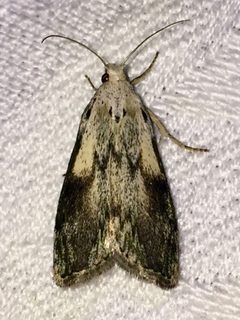
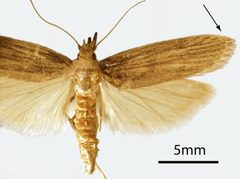
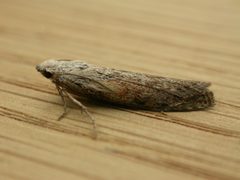
Aphomia is a of small in the Pyralidae, Galleriinae. Some are nest of bees and bumblebees (Anthophila), with larvae feeding on wax, honey, and pollen. Other species, such as A. gularis, are significant pests of stored agricultural products including nuts, dried fruit, and cereals. The genus exhibits diverse ecological strategies spanning of social insect nests and exploitation of stored food products.
Pronunciation
How to pronounce Aphomia: //æˈfoʊmiə//
These audio files are automatically generated. While they are not always 100% accurate, they are a good starting point.
Images
Habitat
Nests of bees and bumblebees; stored product facilities including warehouses, cargoes, and bakeries; subtropical and warm-temperate regions, with some requiring heated premises at northern range limits
Distribution
Southeast Asia (origin of A. gularis); major ports of western Europe and North America; northern Britain and Sweden (heated premises only); distribution varies significantly by
Diet
Wax, honey, and pollen (larvae in /bumblebee nests); nuts, dried fruit, cereals, rice, and grain (stored product pest )
Host Associations
- Bombus terrestris - bumblebee for A. sociella
- Anthophila - bees and bumblebees, nest
- walnuts (Juglans) - pestA. gularis
- almonds - pestA. gularis
- groundnuts - pestA. gularis
- prunes - pestA. gularis
Life Cycle
larvae; spring ; ; mating occurs during scotophase (dark phase)
Behavior
Males of A. sociella initiate mating through a two-phase system: long-range chemical attraction via , followed by short-range ultrasonic courtship songs (60–120 kHz, peak 80–90 kHz) when females approach; males produce ultrasound during rival interactions; calling males wing fan in ~1-second intervals with 0.5s rest periods
Ecological Role
Nest of bumblebees and bees; pest of stored agricultural products; economic pest in bumblebee mass-production facilities; may facilitate additional parasite and in bumblebee colonies through immune suppression
Human Relevance
Significant pest of stored nuts, dried fruit, and cereals requiring and measures; subject to trade inspection and control to prevent spread between countries; pest in commercial bumblebee rearing operations
Similar Taxa
- Corcyra cephalonicaClosely related that fills the of A. gularis in tropical regions
- Ephestia elutellaOutcompetes A. gularis in cooler temperate regions
- Galleria mellonellaRelated wax in Galleriinae, also parasitizes nests
Sources and further reading
- BugGuide
- Wikipedia
- GBIF taxonomy match
- iNaturalist taxon
- NCBI Taxonomy
- Catalogue of Life
- The Occurrence and Distribution ofAphomia gularis(Zell.) (Lep., Galleriidae), A Pest of Stored Products
- Insect Infestation associated with French shelled Walnuts with particular Reference to the Occurrence of Aphomia gularis (Zell.) (Lep., Galleriidae)
- Male Moth Songs Tempt Females to Accept Mating: The Role of Acoustic and Pheromonal Communication in the Reproductive Behaviour of Aphomia sociella
- Infestation levels of Aphomia sociella in bumblebees increase with proximity to apiaries and result in lower reproductive output and weaker immune response
- Whole-genome assembly and annotation of the bumblebee wax moth, Aphomia sociella.