
Nacoleia
Walker, 1859
Banana scab moth (for N. octasema)
Species Guides
1Nacoleia is a of in the Crambidae, Pyraustinae. The genus includes agricultural pests, most notably (), which damages banana crops in tropical Asia and the Pacific. Some serve as for polyembryonic . The genus was established by Walker in 1859.
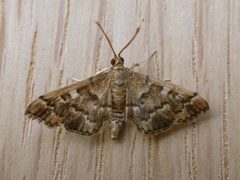
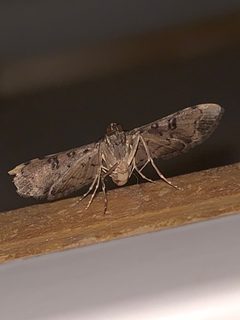
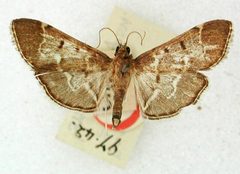
Pronunciation
How to pronounce Nacoleia: /nəˈkoʊliə/
These audio files are automatically generated. While they are not always 100% accurate, they are a good starting point.
Identification
in this can be distinguished from similar Pyraustinae by genitalia characteristics and wing pattern details, though specific diagnostic features require examination. N. octasema is recognized by its association with banana plants and larval damage to fruit.
Images
Habitat
Tropical and subtropical agricultural environments; banana plantations for N. octasema; plants include Musa (banana), Manila hemp, maize, Nipa palm, Heliconia, and Pandanus.
Distribution
Asia: Indonesia, Malaysia, Singapore; Australasia and Pacific Islands: Australia, Fiji, New Caledonia, New Hebrides, Papua New Guinea, Samoa, Solomon Islands, Tonga, Wallis Islands, Irian Jaya. China: Guangxi, Guangdong, Hainan, Fujian, Yunnan, Sichuan.
Diet
Larvae feed on plant tissues; N. octasema larvae develop in association with banana bunch development, with feeding positively related to bunch maturity.
Host Associations
- Musa (banana) - plantprimary for N. octasema
- Manila hemp - plant
- Maize - plant
- Nipa palm - plant
- Heliconia - plant
- Pandanus - plant
- Alstonia scholaris - associated plant plant of Diaphania angustalis, which is parasitized by Copidosomopsis nacoleiae
Life Cycle
Complete . and larval development occurs on plants. For N. octasema, oviposition site preference changes with inflorescence development: early bunching stages favor pseudostem and leaf petioles; later stages favor spade leaf and bracts. Larval development tracks bunch development.
Behavior
Oviposition is stage-dependent on plant development. Larvae exhibit spatial distribution patterns that complicate insecticidal control.
Ecological Role
Agricultural pest of banana and other crops. Some serve as for polyembryonic (e.g., Copidosomopsis nacoleiae), contributing to natural enemy .
Human Relevance
Economic pest of banana ; N. octasema causes fruit damage requiring management. Difficult to control with due to larval distribution patterns within plant structures.
Similar Taxa
- DiaphaniaSimilar Crambidae in Pyraustinae; some formerly confused or share plants and
- LamprosemaN. octasema has been synonymized as Lamprosema octasema in some literature; taxonomic distinction requires verification
More Details
Taxonomic note
The name derives from Nakoleia, an ancient city in Phrygia (modern Turkey). Walker established the genus in 1859. Some have been placed in related genera (e.g., Lamprosema), and taxonomic boundaries within Pyraustinae remain under study.
Parasitoid associations
Copidosomopsis nacoleiae, a polyembryonic encyrtid , is named after this but primarily parasitizes Diaphania angustalis and related Lepidoptera rather than Nacoleia directly. The wasp's specific epithet reflects historical confusion or broader host range within Crambidae.
Sources and further reading
- BugGuide
- GBIF taxonomy match
- iNaturalist taxon
- NCBI Taxonomy
- Catalogue of Life
- Encyrtid Holdings | Entomology Research Museum
- Nacoleia octasema . [Distribution map].
- SPATIAL AND TEMPORAL DISTRIBUTIONS OF EGGS AND LARVAE OF THE BANANA SCAB MOTH, NACOLEIA OCTASEMA (MEYRICK) (LEPIDOPTERA: PYRALIDAE), ON THE BANANA PLANT AND THE PROBLEM OF INSECTICIDAL CONTROL
- Reproductive Behavior of the Polyembryonic Parasitoid Copidosomopsis nacoleiae (Eady) at Different Ages.