
Chabula acamasalis
Walker, 1859
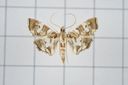
Chabula acamasalis is a small crambid with a wingspan of approximately 20 mm. It occurs across a broad geographic range spanning South Asia, East Asia, and Australia. The is characterized by dark brown forewings marked with contrasting white patches. First described by Francis Walker in 1859 from a specimen originally placed in the Zebronia.
Pronunciation
How to pronounce Chabula acamasalis: //ˈkæbjʊlə əˌkæməˈseɪlɪs//
These audio files are automatically generated. While they are not always 100% accurate, they are a good starting point.
Identification
The combination of small size (~20 mm wingspan), dark brown forewings with white patch pattern, and crambid wing venation distinguishes this . Similar crambid species in the same geographic range may share general coloration; precise identification requires examination of genitalia or comparison of white patch pattern configuration. The original description under Zebronia acamasalis may cause confusion in older literature.
Images
Distribution
India, Myanmar (Burma), Sri Lanka, Hong Kong, Indonesia, Taiwan, Japan, and Australia (widespread). The broad distribution spanning tropical and subtropical regions of South Asia, Southeast Asia, East Asia, and Australia suggests adaptability to varied climatic conditions within this range.
Similar Taxa
- Other Chabula species share similar size range and crambid ; identification to level requires examination of pattern details and genitalia
- Zebronia speciesHistorical confusion due to original placement of C. acamasalis in Zebronia; some Zebronia have similar size and coloration
More Details
Nomenclatural history
Originally described as Zebronia acamasalis Walker, 1859; later transferred to Chabula. The basionym Zebronia acamasalis persists in some databases and may appear in older literature.
Taxonomic placement
Classified in Pyraustinae within Crambidae following modern phylogenetic treatments of Pyraloidea.