Scoparia rigidalis
Barnes & McDunnough, 1912
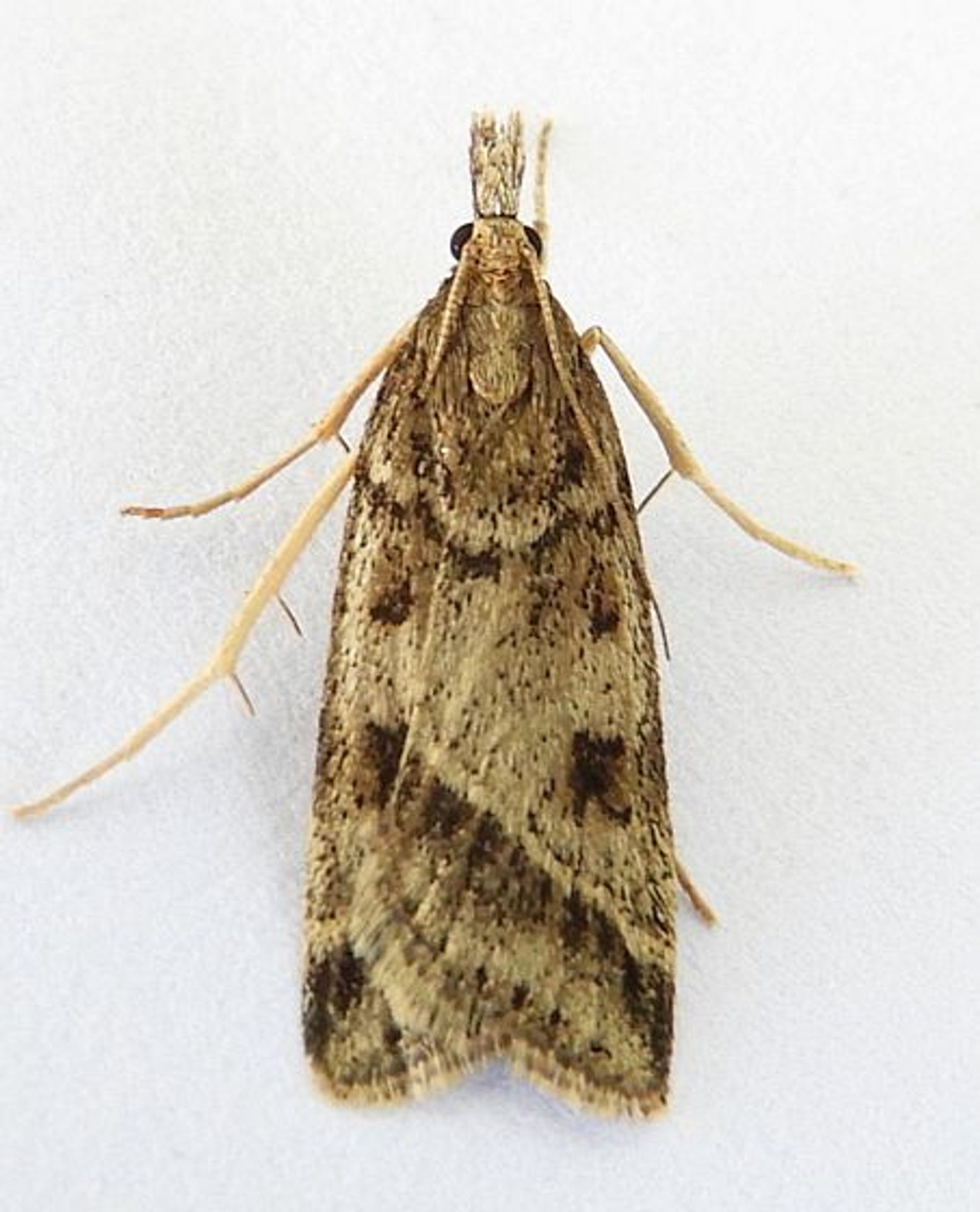
Scoparia rigidalis is a small in the Crambidae, described by William Barnes and James Halliday McDunnough in 1912. The is known from Arizona in North America. have a wingspan of approximately 22 mm and are active from August to September. The forewings display distinctive purplish-brown coloration with contrasting pale markings.
Pronunciation
How to pronounce Scoparia rigidalis: /skɔˈpɑːriə ˌrɪdʒɪˈdeɪlɪs/
These audio files are automatically generated. While they are not always 100% accurate, they are a good starting point.
Identification
Distinguished from similar Scoparia by the combination of: purplish-brown forewings with light gray shading; dark basal third of forewing defined by a pale costal line; smoky hindwings with discal dot and pale subterminal line traces; and specific wing pattern elements including the terminal row of black dots. The stubby rectangular male and short with acutely pointed processes mentioned in the broader context do not apply to this species and should not be used for identification.
Images
Appearance
Small with wingspan approximately 22 mm. Forewings are purplish brown, shaded with light gray in the area. The basal third of the forewing is darkest and defined outwardly by a pale line extending from the to near the middle of the inner margin. Subterminal line is pale. Terminal area is shaded with black brown and bears a terminal row of black dots. Hindwings are smoky, paler towards the base, with a discal dot and traces of a pale subterminal line.
Distribution
Recorded from Arizona, North America. Specific details beyond geographic location are not documented.
Seasonality
have been recorded on wing from August to September.
Similar Taxa
- Other Scoparia speciesSimilar small crambid with overlapping geographic ranges in western North America; distinguished by wing pattern details including the specific arrangement of pale lines and dark shading on the forewings, and the presence of a discal dot on the hindwings