Scoparia biplagialis
Walker, 1866
Double-striped Scoparia Moth
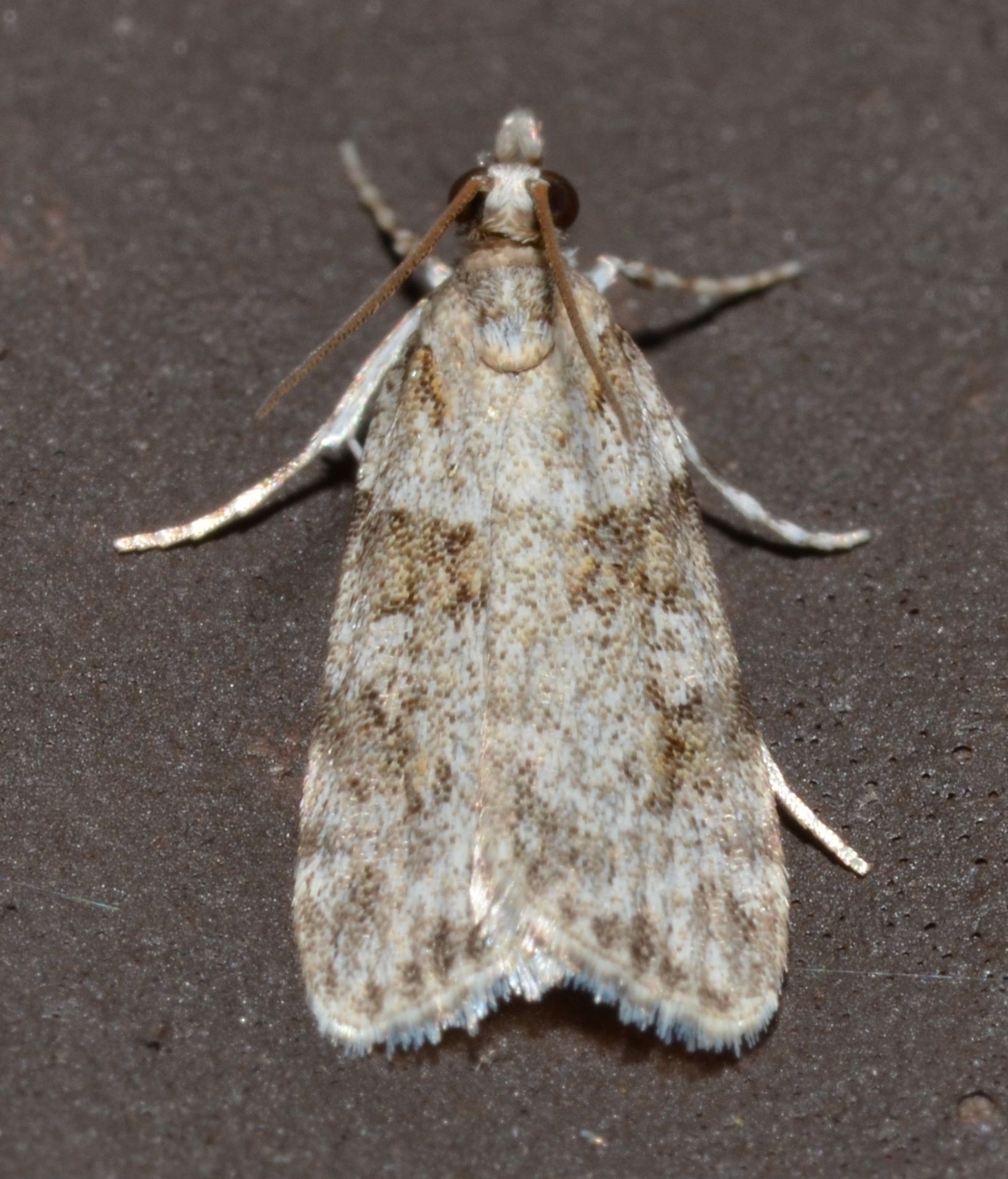
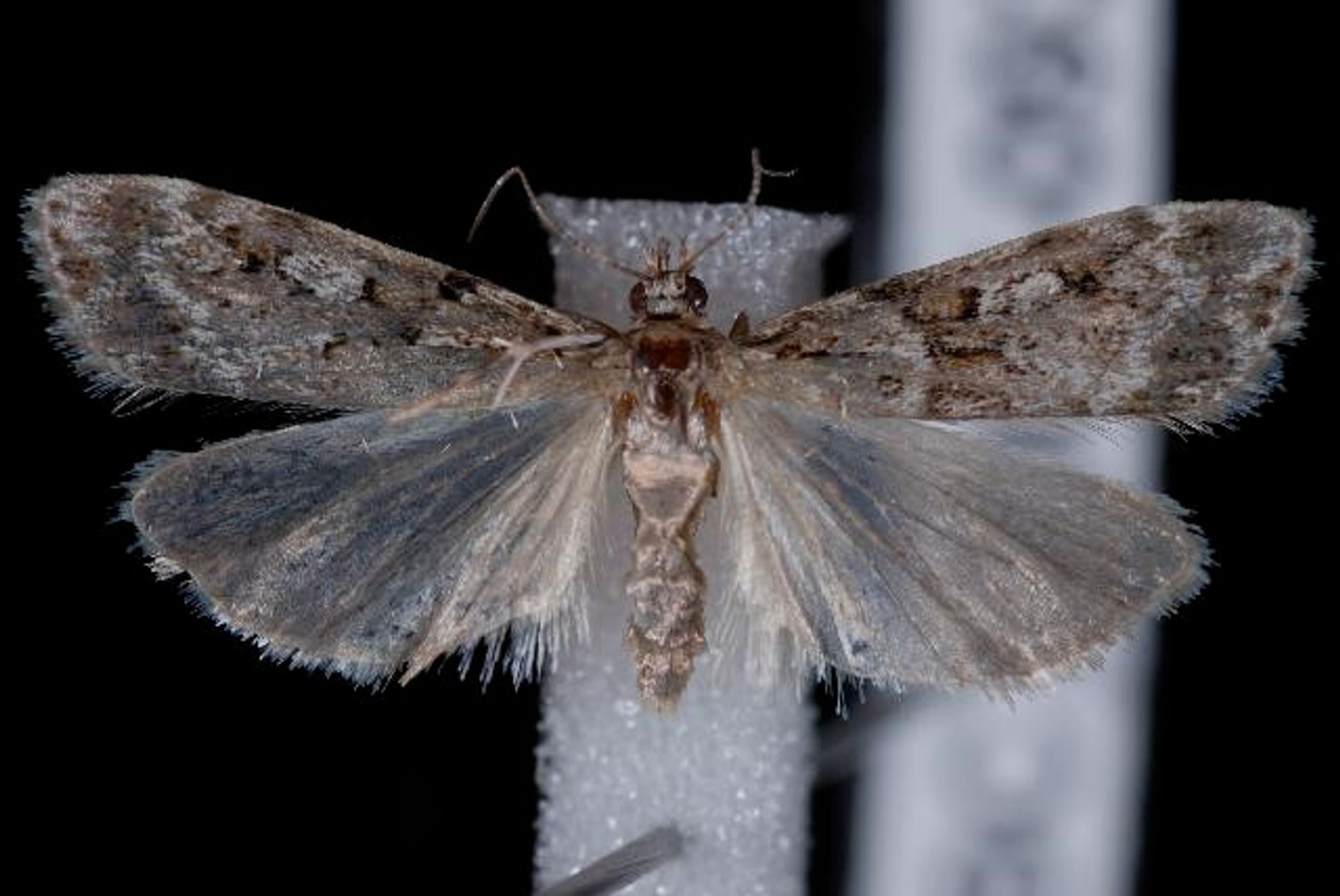
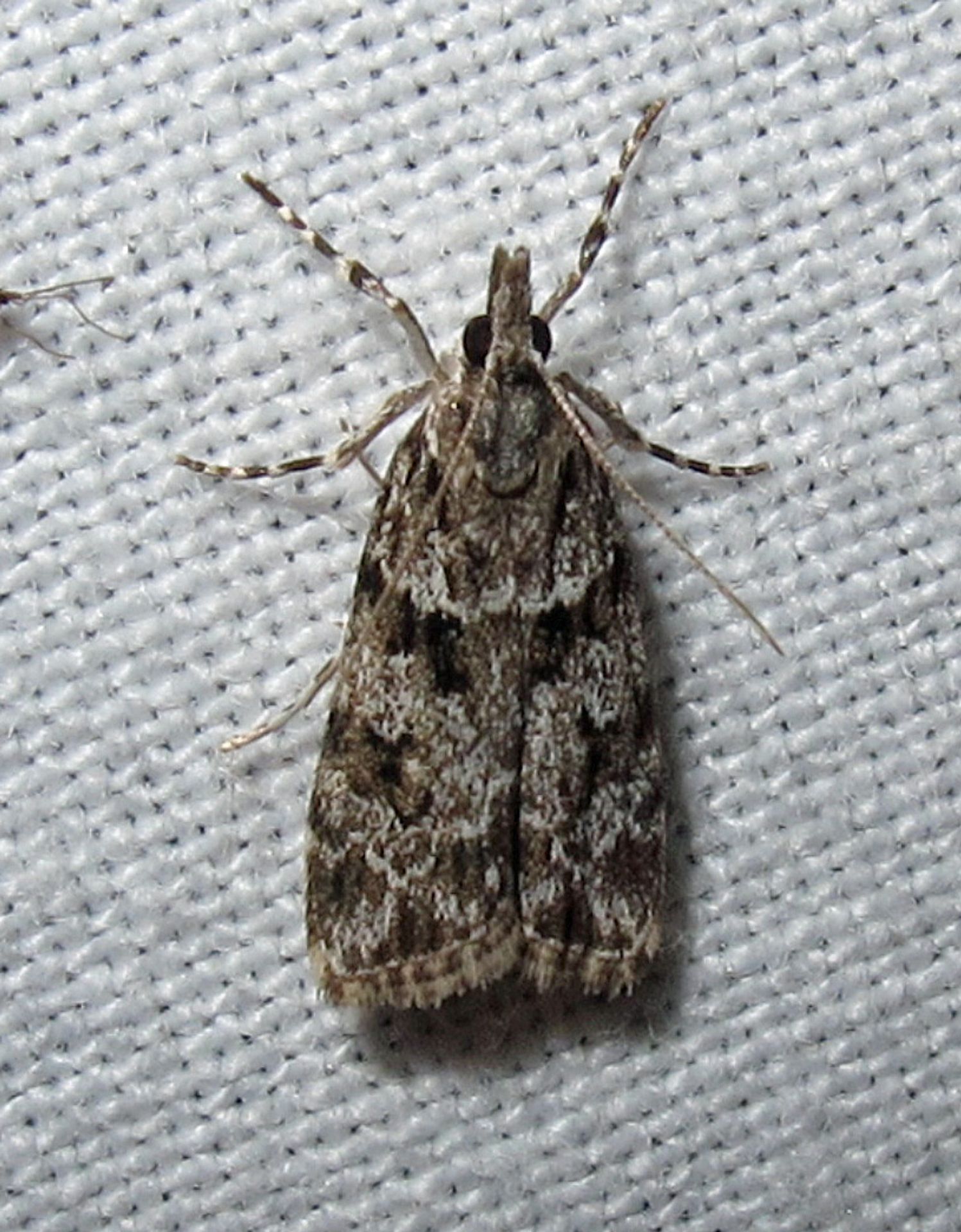
Scoparia biplagialis, known as the double-striped scoparia , is a small crambid moth first described by Francis Walker in 1866. The is characterized by its small size, with forewings measuring 6–8 mm in length. It exhibits a broad distribution across North America, ranging from Alaska and Canada through much of the contiguous United States. are active during summer months, with records from June to August.
Pronunciation
How to pronounce Scoparia biplagialis: //skoʊˈpɛəriə baɪpləˈdʒiːəlɪs//
These audio files are automatically generated. While they are not always 100% accurate, they are a good starting point.
Identification
Distinguished from similar Scoparia by the presence of two prominent dark longitudinal stripes on the forewings. The small size (6–8 mm forewing length) and specific wing pattern separate it from . Examination of genitalia may be required for definitive identification in some cases.
Images
Appearance
Small with forewings 6–8 mm in length. Wing pattern features two distinct dark longitudinal stripes against a lighter background, giving rise to the . Overall coloration typically grayish-brown with contrasting darker markings.
Habitat
Found in diverse terrestrial across its broad North American range. Specific microhabitat preferences are not well documented, but the occurs in both forested and open environments from low elevations to montane areas.
Distribution
North America: recorded from Alabama, Alaska, Alberta, British Columbia, California, Colorado, Florida, Georgia, Illinois, Indiana, Kentucky, Maine, Manitoba, Maryland, Massachusetts, Michigan, Minnesota, Montana, New Brunswick, New Hampshire, New Jersey, New York, North Carolina, North Dakota, Nova Scotia, Ohio, Ontario, Oregon, Pennsylvania, Quebec, Tennessee, Virginia, Washington, West Virginia, and Wisconsin.
Seasonality
on wing from June to August. Single-brooded or with overlapping in warmer parts of range; exact voltinism not confirmed.
Life Cycle
Complete with , larval, pupal, and stages. Larval and plant relationships are unknown. Eggs presumably laid on or near larval food source.
Behavior
; attracted to light. Specific behavioral observations are limited in published literature.
Ecological Role
Larval stage likely functions as a herbivore or ; specific ecological role undocumented. may serve as prey for and contribute to pollination through incidental contact.
Human Relevance
No known economic importance. Occasionally encountered by lepidopterists and naturalists. Not considered a pest .
Similar Taxa
- Other Scoparia speciesMany share similar size and general appearance; S. biplagialis distinguished by the two-stripe forewing pattern
- Other ScopariinaeSmall crambid with similar ; precise identification requires examination of wing pattern details and often genitalia
More Details
Subspecies
Five recognized: S. b. biplagialis, S. b. afognakalis Munroe 1972, S. b. bellaeislae Munroe 1972, S. b. fernaldalis Dyar 1904, and S. b. pacificalis Dyar 1921. Subspecies primarily distinguished by geographic distribution and minor morphological differences.
Taxonomic note
Authorship sometimes cited as Walker, 1865 in some sources (e.g., GBIF), but 1866 is the accepted date per original description and NCBI .