
Schoenobiinae
Duponchel, 1846
Genus Guides
4Schoenobiinae is a of grass moths (Crambidae) established by Duponchel in 1846. The group comprises approximately 30 including Schoenobius, Scirpophaga, Donacaula, and Catagela. Many are stem borers of monocot plants, with larvae feeding internally in stems of grasses, sedges, and rushes. Some genera contain significant agricultural pests, particularly of rice and other cultivated cereals.
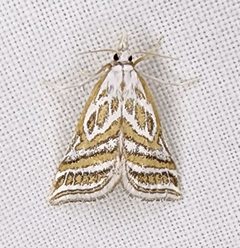
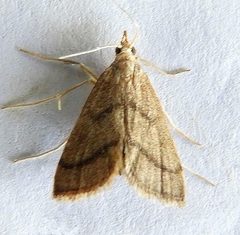
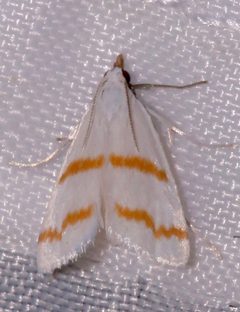
Pronunciation
How to pronounce Schoenobiinae: /skiːnoʊbiːaɪneɪ/
These audio files are automatically generated. While they are not always 100% accurate, they are a good starting point.
Identification
Schoenobiinae generally resemble other Crambidae but are distinguished by larval and associated genitalia characteristics. often have narrow, elongate wings and relatively slender bodies. Male genitalia typically feature distinctive valvae and structures; female genitalia show characteristic signa and ductus bursae . The can be separated from related Crambinae and other subfamilies by the combination of stem-boring larval habit and specific wing venation patterns, though precise identification to requires dissection and reference to specialized keys.
Images
Habitat
Wetlands, marshes, rice paddies, and grassland dominated by monocot vegetation. Associated with standing or slow-moving water where plants of Cyperaceae, Poaceae, and Juncaceae occur.
Distribution
Worldwide distribution with greatest diversity in tropical and subtropical regions. Strong representation in Australasia, Asia, Africa, and the Americas. Australian fauna includes such as Helonastes, Niphadoses, and Tryporyza.
Diet
Larvae are internal stem borers of monocotyledonous plants. Documented associations include cultivated rice (Oryza sativa), sedges (Eleocharis, Cyperaceae), and rushes (Juncaceae). Specific dietary breadth varies by ; some are oligophagous on particular host groups while others show broader associations within Poales.
Host Associations
- Oryza sativa - larval food plantcultivated rice; major pest association in Tryporyza and Niphadoses
- Eleocharis - larval food plantsedge ; for Helonastes acentrus
- Cyperaceae - larval food plantsedge ; for multiple including Scirpophaga
- Juncaceae - larval food plantrush ; for Tipanaea patulella
Life Cycle
Complete with , larva, pupa, and stages. Larvae bore into stems of plants, feeding internally on parenchyma tissue. occurs within the stem or in silken cocoons among plant debris. Adults are typically and short-lived, functioning primarily in .
Behavior
Larvae exhibit stem-boring , tunneling within monocot stems and producing characteristic -filled galleries. This concealed feeding habit provides protection from and environmental extremes. are generally cryptic at rest and attracted to light.
Ecological Role
As stem borers, larvae function as primary consumers of wetland monocot vegetation. Some are significant agricultural pests, causing economic damage to rice crops. In natural , they contribute to nutrient cycling and plant , though their specific role in is poorly documented.
Human Relevance
Several contain serious pests of rice agriculture. Tryporyza innotata (formerly Scirpophaga innotata) and related cause substantial yield losses in south-east Asian and Australian rice production. The has been subject to taxonomic revision to clarify species boundaries and improve pest management identification.
Similar Taxa
- CrambinaeSimilar grass moth and larval habits, but distinguished by different genitalia structure and typically external feeding or root-boring rather than internal stem-boring in many
- Schoenobiinae (former Pyralidae placement)Historically classified in Pyralidae rather than Crambidae; modern molecular confirms placement in Crambidae
More Details
Taxonomic History
The has undergone substantial revision, particularly for Australian and New World faunas. The 1996 revision by K. A. K. established current generic limits for Australian stem borers, transferring from Schoenobius and Scirpophaga to new Helonastes, Niphadoses, and Tryporyza based on genitalia and associations.
Molecular Phylogenetics
Regier et al. (2012) confirmed Schoenobiinae as a within Crambidae, supporting its separation from related and clarifying its position in the broader Pyraloidea .