
Pyrausta volupialis
Grote, 1877
volupial pyrausta moth, Volupial Mint Moth
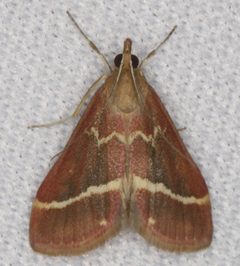
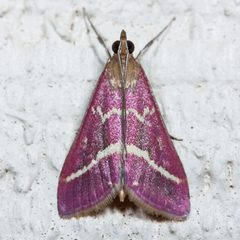
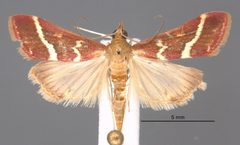
Pyrausta volupialis is a small crambid described by Grote in 1877. The occurs across western North America from the southwestern United States through Mexico. Larvae feed on plants in the mint (Lamiaceae), including rosemary (Rosmarinus officinalis). are active year-round in suitable climates.
Pronunciation
How to pronounce Pyrausta volupialis: //paɪˈraʊstə vəˌluːpiˈælɪs//
These audio files are automatically generated. While they are not always 100% accurate, they are a good starting point.
Identification
The small forewing length (8-10.5 mm) distinguishes this from larger Pyrausta species. Geographic range in western North America and association with Lamiaceae may aid identification. can be distinguished from the similar raspberry pyrausta (Pyrausta signatalis) by geographic distribution and host plant preferences—P. signatalis occurs in eastern North America and feeds primarily on Monarda species.
Images
Habitat
Occurs in arid and semi-arid regions of western North America. Associated with supporting Lamiaceae plants, including cultivated rosemary and native mint vegetation.
Distribution
Western North America from Oklahoma, Utah, Texas, Colorado, New Mexico, Arizona, and California south through Mexico to Chiapas.
Seasonality
have been recorded throughout the year, indicating continuous activity in suitable climates. Larval activity likely coincides with plant growth periods.
Diet
Larvae feed on Lamiaceae , specifically documented on Rosmarinus officinalis (rosemary).
Host Associations
- Rosmarinus officinalis - larval food plantDocumented ; larvae feed on this cultivated rosemary
Ecological Role
As a herbivore on Lamiaceae, larvae contribute to herbivory pressure on mint plants. The may serve as prey for including birds and predatory insects.
Human Relevance
Larvae may damage cultivated rosemary and ornamental mint plants. The is not considered a major agricultural pest but may cause localized damage in gardens.
Similar Taxa
- Pyrausta signatalisSimilar size and appearance, but distinguished by eastern North American distribution and primary association with Monarda ( balm) rather than western range and rosemary association of P. volupialis
More Details
Taxonomic history
Originally described as Botis volupialis by Grote in 1877, later transferred to Pyrausta.