
Pyrausta tyralis
Guenée, 1854
coffee-loving pyrausta moth
Pyrausta tyralis, commonly known as the coffee-loving pyrausta , is a small crambid moth described by Achille Guenée in 1854. The exhibits broad geographic distribution across the southeastern and central United States, extending south through Mexico to Venezuela and throughout the West Indies. have been recorded in year-round in warmer regions. The larvae are documented to feed on several plant species including Psychotria nervosa, P. undata, Bidens connata, and Dahlia species.
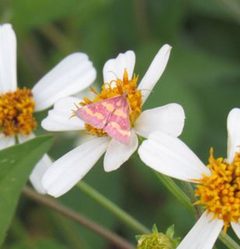
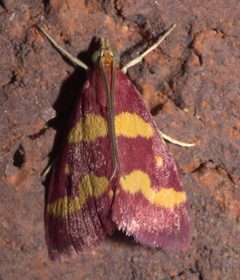
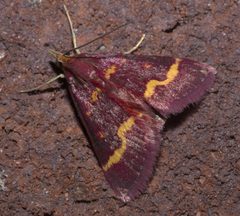
Pronunciation
How to pronounce Pyrausta tyralis: /pɪˈraʊstə tɪˈreɪlɪs/
These audio files are automatically generated. While they are not always 100% accurate, they are a good starting point.
Identification
are small (wingspan ~17 mm) in the Crambidae with the characteristic elongated labial palps that give snout moths their . Specific coloration and pattern details are not provided in available sources. The may be distinguished from similar Pyrausta species by geographic range and association with known larval plants where identification to species is required.
Images
Habitat
Has been observed in restored tallgrass prairie remnants, where are attracted to ultraviolet light stations. The likely occupies diverse open given its broad geographic range and association with various herbaceous plants.
Distribution
United States: recorded from New York west to Illinois and from Florida west to Arizona. Mexico to Venezuela. West Indies.
Seasonality
have been recorded on wing year round, suggesting continuous or overlapping in suitable climates.
Diet
Larvae feed on Psychotria nervosa, Psychotria undata, Bidens connata, and Dahlia . feeding habits are not documented.
Host Associations
- Psychotria nervosa - larval food plant
- Psychotria undata - larval food plant
- Bidens connata - larval food plant
- Dahlia - larval food plant not specified
Behavior
are and have been observed at ultraviolet light stations. Specific behavioral details beyond activity are not documented.
Similar Taxa
- Pyrausta signatalisSimilar and (raspberry pyrausta), but distinguished by larval association with Monarda rather than the Psychotria, Bidens, and Dahlia hosts of P. tyralis
More Details
Taxonomic note
The basionym Rhodaria tyralis was established by Guenée in 1854 before transfer to Pyrausta.