
Pyrausta subsequalis
Guenée, 1854
Weedfield Sable, Mottled Pyrausta Moth
Species Guides
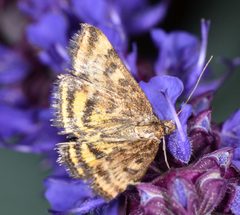
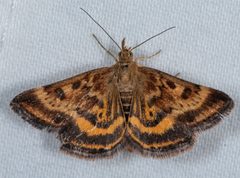
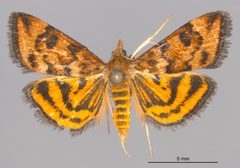
1Pyrausta subsequalis is a small crambid native to much of North America. are active primarily from July through early September, though in coastal California are present year-round. The inhabits dry prairie environments across a broad range from southern Canada to the southern United States. Two are recognized: the nominate form and P. s. petaluma restricted to California and Oregon.
Pronunciation
How to pronounce Pyrausta subsequalis: /pɪˈraʊstə səbsəˈkwɑːlɪs/
These audio files are automatically generated. While they are not always 100% accurate, they are a good starting point.
Identification
Small size and narrow wings distinguish it from larger pyralid moths. The specific epithet and association with dry prairie may aid separation from , though detailed diagnostic features are not documented in available sources.
Images
Appearance
Small with wingspan of 14–18 mm. have narrow, relatively unmarked wings typical of the .
Habitat
Dry prairie areas. The P. s. petaluma occurs in coastal regions of California and Oregon.
Distribution
North America: southern Alberta and southern British Columbia south to Arizona and New Mexico, east to Florida, and north to Ontario. The P. s. petaluma is restricted to California and Oregon.
Seasonality
active July to early September. Year-round activity in coastal California areas.
More Details
Taxonomic history
The original name Herbula subsequalis Guenée, 1854 was accompanied by a proposed replacement name Herbula insequalis in an erratum (p. 447 of the same publication). Guenée's stated justification—that subsequalis was preoccupied by 'subsequalis Herr.-Sch.' (later Mecyna subsequalis)—is invalid because the pre-existing name is not a homonym. Therefore, Herbula insequalis is a superfluous replacement name and junior objective synonym of P. subsequalis.
Subspecies
Pyrausta subsequalis subsequalis (nominate ); Pyrausta subsequalis petaluma Munroe, 1976 (California, Oregon).