
Pyrausta laticlavia
Grote & Robinson, 1867
Southern Purple Mint Moth
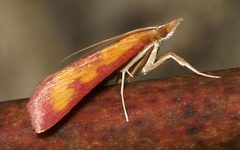
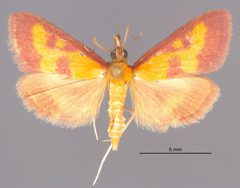
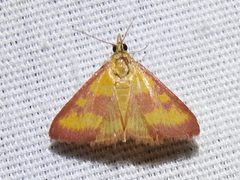
Pyrausta laticlavia, commonly known as the southern purple mint , is a small crambid moth with a wingspan of approximately 17 mm. The occurs across the southern and western United States and has demonstrated northward range expansion in California during the 1990s. are active during summer months, with periods varying by location.
Pronunciation
How to pronounce Pyrausta laticlavia: /pɪˈraʊstə lætɪˈkleɪviə/
These audio files are automatically generated. While they are not always 100% accurate, they are a good starting point.
Identification
The small size (17 mm wingspan) and purple coloration distinguish this from larger crambid . Range and association with mint plants may aid identification. Distinguishing from congeneric species requires examination of genitalia or detailed wing pattern analysis not covered in available sources.
Images
Habitat
Associated with supporting plants in the mint (Lamiaceae). Specific habitat types not documented beyond general distribution range.
Distribution
Eastern United States from New Jersey south to Florida; westward through Texas and Oklahoma to California. In California, range has expanded northward into the San Francisco Bay area (documented 1990) and Sacramento Valley (documented 1993).
Seasonality
fly from June to August; exact timing varies by location within range.
Diet
Larvae have been reared on Rosmarinus officinalis (rosemary). feeding habits not documented.
Host Associations
- Rosmarinus officinalis - larval plantDocumented rearing record; may represent one of multiple in Lamiaceae
Life Cycle
Complete with , larval, pupal, and stages. Specific details of developmental timing and stage not documented.
Ecological Role
Herbivore; larvae feed on Lamiaceae. Specific ecological functions beyond herbivory not documented.
Human Relevance
Potential minor garden pest on ornamental rosemary; no significant economic impact documented.
Similar Taxa
- Pyrausta signatalisBoth are small crambid in the same associated with mint plants; P. signatalis (raspberry pyrausta) feeds on Monarda and can be distinguished by association and pattern details not specified in sources for P. laticlavia
More Details
Range Expansion
Documented northward expansion in California during the 1990s suggests either climate-mediated range shift or increased detection effort in previously unrecorded areas.