
Pyrausta insignitalis
Guenée, 1854
dark-banded pyrausta moth
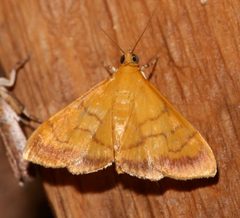
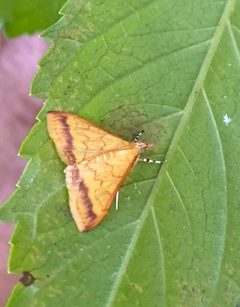
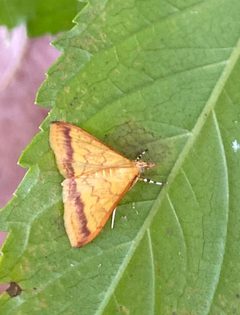
Pyrausta insignitalis is a small crambid commonly known as the dark-banded pyrausta moth. First described by Guenée in 1854, this is found in the southeastern United States, the West Indies, and extends through Central and South America. It is a member of the snout moth , characterized by elongated mouthparts projecting from the .
Pronunciation
How to pronounce Pyrausta insignitalis: /pɪˈraʊstə ɪnˌsɪɡnɪˈteɪlɪs/
These audio files are automatically generated. While they are not always 100% accurate, they are a good starting point.
Identification
can be recognized by dark transverse bands on the wings combined with the characteristic snout-like projection of crambid . Distinguishing this from other Pyrausta species requires examination of wing pattern details and genitalia. The species name 'insignitalis' refers to the marked or banded appearance.
Images
Habitat
Associated with flowering plants, particularly members of the mint (Lamiaceae) such as Monarda . In the United States, found in gardens and natural areas supporting spotted beebalm, scarlet beebalm, and wild bergamot.
Distribution
United States: recorded from Florida and South Carolina. West Indies. Central America and South America.
Seasonality
activity period not explicitly documented. Related Pyrausta in temperate regions are active from late spring through summer, with multiple per year.
Life Cycle
Not documented in available sources for this . Related Pyrausta species are known to have multiple annually with complete .
Behavior
Not documented in available sources for this .
Ecological Role
Not documented in available sources.
Human Relevance
Not documented as a significant pest for this . Closely related Pyrausta species, particularly Pyrausta signatalis (raspberry pyrausta), are known garden pests of Monarda and mint plants.
Similar Taxa
- Pyrausta signatalisClosely related known as the raspberry pyrausta, which is a documented pest of Monarda species. P. signatalis has been extensively studied for its garden pest status, while P. insignitalis has received less attention. The two species may be confused due to similar size, associations, and wing patterns.
- Other Pyrausta speciesMany Pyrausta share similar small size, crambid with snout-like palps, and banded wing patterns. Accurate identification often requires dissection and examination of genitalia.
More Details
Taxonomic note
This was originally described as Rhodaria insignitalis by Guenée in 1854 before being transferred to the Pyrausta. The basionym reflects historical classification within a now synonymized genus.
Data limitations
Most detailed biological information available in popular sources refers to Pyrausta signatalis rather than P. insignitalis. The two appear to have similar but should not be conflated without verification.