
Pyrausta aurea
Butler, 1875
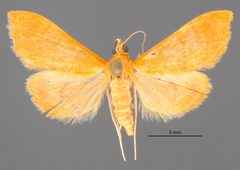
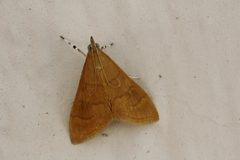
Pyrausta aurea is a small crambid described by Butler in 1875. are bright orange with distinctive wing markings and show in size. The occurs from the southwestern United States through Central America. Adults are active during summer months.
Pronunciation
How to pronounce Pyrausta aurea: /pɪˈraʊstə ˈaʊriə/
These audio files are automatically generated. While they are not always 100% accurate, they are a good starting point.
Identification
The combination of small size, bright orange coloration, and faint oblique antemedial line on the forewings distinguishes this from similar Pyrausta. The geographic range (southwestern US to Central America) and summer period provide additional diagnostic context. Similar orange Pyrausta species in the region require examination of genitalia or wing pattern details for definitive separation.
Images
Distribution
Nevada, southern Arizona, southern Texas, and Mexico south at least to Rica.
Seasonality
on wing from June to August.
Similar Taxa
- Pyrausta signatalisSimilar small orange crambid ; distinguished by wing pattern details and geographic distribution (eastern North America vs. southwestern US/Central America for P. aurea)
- Other Pyrausta speciesMany Pyrausta share orange or reddish coloration; accurate identification requires examination of genitalic structures and precise wing pattern elements
More Details
Taxonomic Note
Authorship is sometimes cited as Hampson, 1913 in error; the original description was by Butler in 1875 under the basionym Pachyzancla aurea.