
Loxostege cereralis
Zeller, 1872
Alfalfa Webworm, Alfalfa Webworm Moth
Loxostege cereralis, commonly known as the alfalfa webworm, is a crambid distributed across much of North America. The species is known for its larval association with alfalfa and other agricultural crops, making it economically significant in some regions. have a wingspan of 30–34 mm and are active during an extended period from March through October in warmer areas.
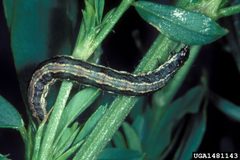
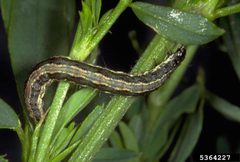
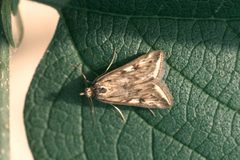
Pronunciation
How to pronounce Loxostege cereralis: /ˌlɒksəˈstiːdʒ ˌserəˈrɑːlɪs/
These audio files are automatically generated. While they are not always 100% accurate, they are a good starting point.
Identification
May be distinguished from related Loxostege by examination of genitalia; specific external diagnostic characters are not well documented in available sources. The 'alfalfa webworm' reflects its larval association with that plant, though this alone is insufficient for definitive identification.
Images
Appearance
have a wingspan of 30–34 mm. The exhibits the typical crambid body plan with a relatively slender build.
Habitat
Associated with agricultural and weedy environments where larval plants grow. The has been documented in a broad range of open across its extensive geographic range.
Distribution
Found from Quebec to British Columbia in Canada, extending south to Mexico in western North America. Distribution records include irregular occurrences in Alberta, Manitoba, and Saskatchewan in Canada, and Vermont in the United States.
Seasonality
are on wing from March to October. In Alberta, the period is more restricted, occurring from May to early September.
Diet
Larvae feed on alfalfa (Medicago sativa) and a variety of other crops and weed . Specific feeding habits are not documented.
Host Associations
- Medicago sativa - larval food plantprimary ; source
Ecological Role
Larval stage functions as a herbivore on leguminous and other crop plants. The serves as a recorded for the mason wasp Euodynerus annulatus, which provisions its nests with paralyzed caterpillars of this and related Loxostege species.
Human Relevance
Considered a pest of alfalfa and other crops due to larval feeding damage. The is abundant enough along the Colorado Front Range to serve as a major food source for predatory .
Similar Taxa
- Other Loxostege speciesCongeneric share similar and larval habits; identification often requires genitalia examination
More Details
Taxonomic note
Originally described as Eurycreon cereralis by Zeller in 1872 before transfer to Loxostege.