
Loxostege allectalis
Grote, 1877
Wolfberry Loxostege Moth
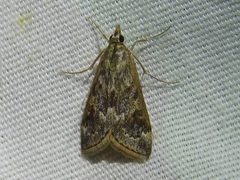
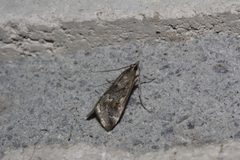
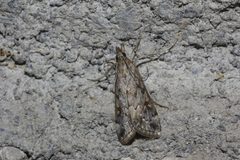
Loxostege allectalis is a small crambid described by Grote in 1877. It occurs from southern California through Texas and south into Mexico and Central America. The has a wingspan of 21–26 mm and is active from March to September. Its larvae feed specifically on Lycium berlandieri.
Pronunciation
How to pronounce Loxostege allectalis: /lɔkˈsɔstɛɡe ælˈlɛktəlɪs/
These audio files are automatically generated. While they are not always 100% accurate, they are a good starting point.
Identification
May be distinguished from other Loxostege by geographic range and, where sympatric, by genitalia examination. The specific association with Lycium berlandieri as a larval may aid identification in conjunction with specimens.
Images
Appearance
Habitat
Associated with supporting its larval plant Lycium berlandieri. Specific habitat preferences of not documented.
Distribution
United States: southern California to Texas. Range extends south through Mexico into Central America.
Seasonality
on wing March to September.
Diet
Larvae feed on Lycium berlandieri. feeding habits not documented.
Host Associations
- Lycium berlandieri - larval sole documented plant
Life Cycle
Complete with , larval, pupal, and stages. Specific details of developmental timing and site not documented.
Ecological Role
Larval herbivore on Lycium berlandieri. Documented as a major for the mason wasp Euodynerus annulatus, which provisions its nests with Loxostege caterpillars.
Human Relevance
Of minor economic interest as a for beneficial . Not known as a pest.
Similar Taxa
- Other Loxostege speciesSimilar general appearance; requires examination of genitalia or association for definitive identification
More Details
Etymology
Specific epithet 'allectalis' etymology not documented in available sources.
Taxonomic history
Originally described as Botis allectalis by Grote in 1877; later transferred to Loxostege.