
Diatraea evanescens
Dyar, 1917
Black-dot Diatraea
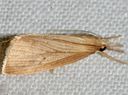
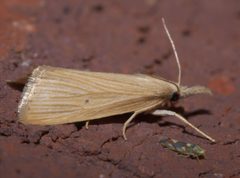
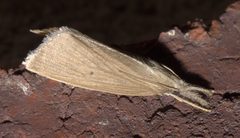
Diatraea evanescens is a in the Crambidae, first described by Harrison Gray Dyar Jr. in 1917. It is found across the southeastern and south-central United States. The has a wingspan of approximately 18–20 mm and is active from March through September. Larvae feed on Paspalum larranagae, a grass species.
Pronunciation
How to pronounce Diatraea evanescens: //daɪəˈtriːə ˌɛvəˈnɛsɛnz//
These audio files are automatically generated. While they are not always 100% accurate, they are a good starting point.
Identification
Diatraea evanescens can be distinguished from other Diatraea by its geographic distribution and association with Paspalum larranagae as a larval . The specific epithet 'evanescens' and the 'Black-dot Diatraea' suggest possible distinguishing markings, though detailed diagnostic features require examination. Accurate identification typically requires reference to genitalia or molecular analysis.
Images
Appearance
have a wingspan of about 18–20 mm. Specific coloration and pattern details are not well documented in available sources.
Habitat
Associated with where the larval plant Paspalum larranagae occurs. This grass typically grows in open, disturbed areas, fields, and roadsides in the southeastern United States.
Distribution
Found in the United States: Alabama, Arkansas, Florida, Georgia, Louisiana, Maryland, Mississippi, North Carolina, Ohio, Oklahoma, South Carolina, Tennessee, and Texas.
Seasonality
have been recorded on wing from March to September.
Diet
Larvae feed on Paspalum larranagae (a grass ). feeding habits are not documented.
Host Associations
- Paspalum larranagae - larval plantGrass ; sole documented for larvae
Life Cycle
Complete with , larval, pupal, and stages. Specific details of development duration and stage are not documented for this .
Ecological Role
As a herbivore, larvae contribute to nutrient cycling through consumption of grass . The is part of the supporting and of Crambidae larvae.
Human Relevance
Not documented as a significant agricultural pest. The Diatraea includes several economically important stalk-boring pests of sugarcane and corn, but D. evanescens is not among them.
Similar Taxa
- Diatraea saccharalisAlso in Diatraea and occurs in overlapping geographic range, but is a major pest of sugarcane and corn with different associations and typically larger size
- Diatraea grandiosellaSouthwestern corn borer with similar but different distribution (more western) and preferences
More Details
Taxonomic note
The specific epithet 'evanescens' (meaning 'vanishing' or 'fading') and 'Black-dot Diatraea' suggest possible wing markings, though these are not described in detail in available literature.
Research gaps
Detailed morphological descriptions, larval , and economic significance remain poorly documented for this compared to congeneric pests such as D. saccharalis.
Sources and further reading
- BugGuide
- Wikipedia
- GBIF taxonomy match
- iNaturalist taxon
- NCBI Taxonomy
- Catalogue of Life
- Stalk-boring insect pests - AgriLife Extension Entomology
- Insects that feed on developing grain in the head - AgriLife Extension Entomology
- “Picudo negro” (black weevil) on soybean in Argentina | Beetles In The Bush
- Biological Control in Brazil is Used on an Area that is Larger than Belgium
- A New Resource for Fighting the Mexican Rice Borer
- Argentina | Beetles In The Bush | Page 7