
Vaxi
Bleszynski, 1962
Species Guides
4- Vaxi auratella
- Vaxi critica(Straight-lined Vaxi Moth)
- Vaxi nr-auratellus
- Vaxi tripsacas(Black-spotted Vaxi Moth)
Vaxi is a of snout moths in the Crambidae, established by Bleszynski in 1962. The genus contains five described distributed in North America. Species in this genus are small associated with grassland and agricultural .
Pronunciation
How to pronounce Vaxi: /ˈvæksi/
These audio files are automatically generated. While they are not always 100% accurate, they are a good starting point.
Identification
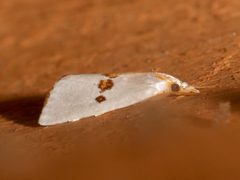
Members of Vaxi can be distinguished from related crambid by genitalia ; males possess distinctive valvae structures. External features include relatively narrow forewings with subtle patterning in shades of brown, tan, and gold. The genus is most readily separated from similar grass moths (Crambinae) by dissection and examination of male genitalia.
Images
Habitat
Grassland , including prairies, meadows, and agricultural fields. Associated with grasses and sedges.
Distribution
North America; recorded from the United States including Vermont and other eastern and central states.
Similar Taxa
- FissicrambusSimilar grassland crambine with narrow wings; distinguished by male genitalia structure and wing pattern details
- CrambusLarger and more diverse with overlapping preferences; Vaxi generally smaller with less pronounced wing markings
More Details
Etymology
The name Vaxi was coined by Bleszynski without explicit etymological statement; possibly derived from Latin or constructed as an arbitrary combination.
Taxonomic history
Originally described by Stanisław Bleszynski in 1962. The was established to accommodate previously placed in other crambine genera based on genitalia .