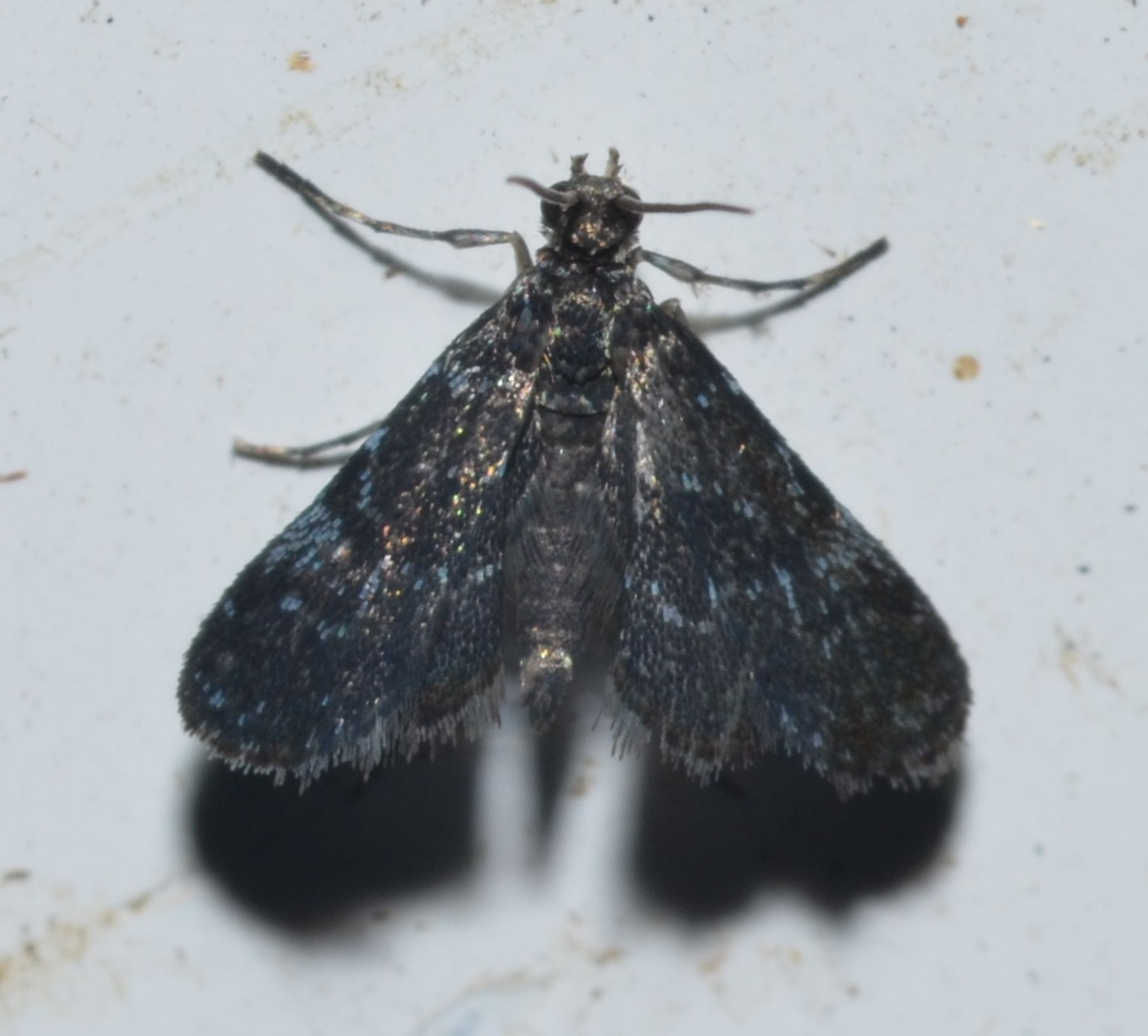
Elophila tinealis
Munroe, 1972
Black Duckweed Moth


Pronunciation
How to pronounce Elophila tinealis: /ɛˈlɒfɪlə tɪnɪˈeɪlɪs/
These audio files are automatically generated. While they are not always 100% accurate, they are a good starting point.
Identification
May be distinguished from related Elophila by association with Lemna plants in swampy ; specific diagnostic morphological features are not documented in available sources.
Images
Habitat
Swamps and wet woods.
Distribution
North America: Michigan, Ontario, New York south to Florida, and west to Texas. Additional records from Vermont.
Diet
Larvae feed on Lemna (duckweeds). diet is not documented.
Host Associations
- Lemna - larval food plantduckweed
Ecological Role
Larval herbivore on aquatic duckweeds; may serve as for , though specific parasitoid relationships for E. tinealis are not documented.
Similar Taxa
- Elophila turbataCongeneric with similar aquatic habits; E. turbata larvae construct portable cases from aquatic plant fragments and are known of the Microgaster godzilla, whereas E. tinealis is associated with Lemna feeding and lacks documented case-building .
More Details
Taxonomic note
The Elophila belongs to Acentropinae, a group of crambid often associated with aquatic or semi-aquatic .