Usingeriessa brunnildalis
Dyar, 1906
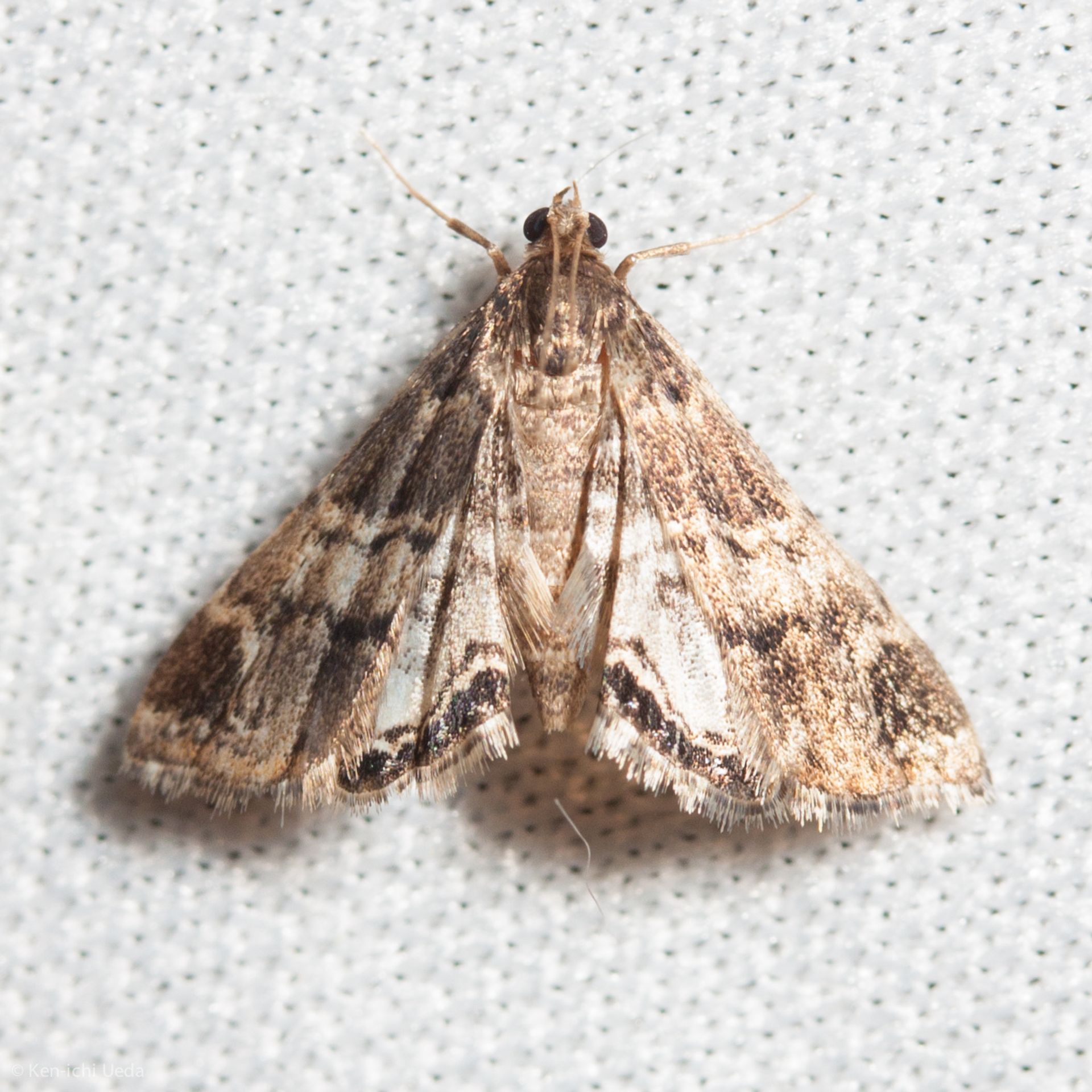
Usingeriessa brunnildalis is a small crambid described by Harrison Gray Dyar Jr. in 1906. It is known from California and Texas in the southwestern United States. The has a distinctive wing pattern with dark brown forewings that are lighter in the area and at the anal angle, contrasting with gray hindwings. The larval stage is aquatic, inhabiting rocks in streams where it feeds on .
Pronunciation
How to pronounce Usingeriessa brunnildalis: /juːˌsɪŋɡəˈriːsə ˌbrʌnˈnɪldəlɪs/
These audio files are automatically generated. While they are not always 100% accurate, they are a good starting point.
Identification
Distinguished from similar crambid by the combination of dark brown forewings with a distinctly lighter area and anal angle, gray (not brown) hindwings, and small size. The aquatic larval on stream rocks is also diagnostic for this within its .
Images
Appearance
Small with forewing length 7.5–11 mm. Forewings dark brown with lighter area and anal angle. Hindwings uniformly gray.
Habitat
occur in terrestrial near streams. Larvae inhabit rocks in streams, specifically those covered in .
Distribution
Recorded in the United States: California and Texas.
Seasonality
active from August to October.
Diet
Larvae feed on growing on rocks in streams. diet not documented.
Life Cycle
Larval stage is aquatic, living on -covered rocks in streams. and other life stages not described in available sources.
Behavior
are and attracted to light. Larvae are aquatic and graze on .
Ecological Role
Larvae function as primary consumers in stream , grazing on periphyton () on submerged rocks. This places them in the aquatic as herbivores that may serve as prey for aquatic .
Human Relevance
No documented economic or agricultural significance. Occasionally encountered by aquatic ecologists and enthusiasts.
Similar Taxa
- Other Usingeriessa species share aquatic larval habits but differ in wing pattern and distribution; U. brunnildalis is distinguished by its specific forewing color pattern and southwestern US range
- Other Acentropinaemany have aquatic larvae, but U. brunnildalis is distinguished by the combination of dark brown forewings with light area and gray hindwings
More Details
Taxonomic placement
Placed in Acentropinae, a group of crambid commonly known as aquatic or semi-aquatic moths due to their association with water during stages.
Etymology
Specific epithet 'brunnildalis' is of unclear derivation; may relate to 'Brunhild' from Germanic mythology, though this is speculative.