
Petrophila heppneri
Blanchard & Knudson, 1983
Heppner's Petrophila
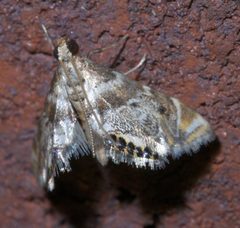
Petrophila heppneri is a small in the Crambidae, described in 1983 by André Blanchard and Edward C. Knudson. The species is known from Texas, where it inhabits riparian and aquatic-associated typical of the Petrophila. Like other members of this genus, the larvae are presumed to be aquatic and feed on . are and can be attracted to light. The specific epithet honors Dr. J. B. Heppner, a lepidopterist who contributed significantly to the study of North American microlepidoptera.
Pronunciation
How to pronounce Petrophila heppneri: /pɛˈtrɒfɪlə hɛpˈnɛri/
These audio files are automatically generated. While they are not always 100% accurate, they are a good starting point.
Identification
Members of the Petrophila are small crambid with narrow wings and relatively long labial palps. They are distinguished from superficially similar aquatic moths in other genera by their characteristic resting posture with wings folded tightly against the body, and by male genitalia features. Petrophila heppneri specifically can be distinguished from by subtle differences in wing pattern and genitalic , though precise diagnostic features require examination of type material or original description.
Images
Habitat
Riparian and aquatic-associated , including streams, rivers, and lakeshores. The Petrophila is strongly associated with freshwater habitats where larvae develop.
Distribution
Known from Texas, USA. The has been recorded from multiple localities within the state based on iNaturalist observations.
Diet
Larvae presumably feed on growing on rocks in aquatic environments, as is typical for the . feeding habits unknown.
Life Cycle
Presumed to have aquatic larvae that pupate in silken cases attached to submerged rocks, emerging as that are active at night. Detailed information is not documented for this specifically.
Behavior
are and attracted to light sources. Larval involves grazing on algal films in flowing or standing freshwater.
Ecological Role
Larvae contribute to nutrient cycling in freshwater through algal grazing. may serve as prey for .
Human Relevance
No significant direct human relevance. The is of interest to lepidopterists studying North American microlepidoptera diversity.
Similar Taxa
- Other Petrophila speciesCongeneric share similar aquatic associations and general ; precise identification requires examination of genitalia or reference to original description.
More Details
Etymology
The specific epithet 'heppneri' honors Dr. J. B. Heppner, a in microlepidoptera who worked at the Florida State Collection of Arthropids.
Taxonomic history
Described relatively recently in 1983, this represents part of the ongoing documentation of North American crambid diversity. The Petrophila has undergone taxonomic revision, with some species formerly placed in related genera.