
Acentropini
China-mark moths
Genus Guides
1- Acentria(watermilfoil moth)
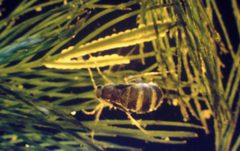
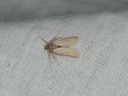
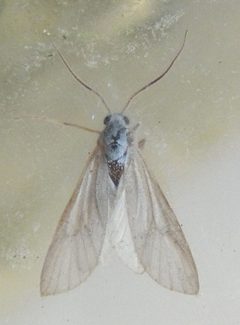
Acentropini is a tribe of aquatic within the Crambidae, commonly known as china-mark moths. are small to medium-sized moths with wingspans typically ranging from 15–35 mm. The tribe is distinguished by larvae that are fully aquatic, breathing through gills and feeding on submerged aquatic plants. These moths are found across temperate and tropical regions worldwide, with highest diversity in the Old World tropics.
Pronunciation
How to pronounce Acentropini: /ˌæ.sɛnˈtɹoʊ.pɪˌnaɪ/
These audio files are automatically generated. While they are not always 100% accurate, they are a good starting point.
Identification
Aquatic larval is the primary distinguishing feature of this tribe. can be recognized by the combination of: relatively broad wings with wavy transverse fasciae; presence of a distinct discal spot on the forewing in many ; and association with freshwater habitats. Distinguished from related crambid tribes by the fully aquatic larvae with tracheal gills; other crambid larvae are terrestrial or semi-aquatic at most. Genitalia characteristics (particularly male valvae structure and female signum) are used for definitive species identification.
Images
Habitat
Strictly associated with freshwater aquatic environments. Larvae inhabit ponds, lakes, slow-moving streams, marshes, and rice paddies. Found in both permanent and temporary water bodies. often rest on emergent vegetation near water margins. Tolerate a range of water qualities from oligotrophic to eutrophic conditions.
Distribution
in distribution. Well-represented in the Palearctic, Oriental, and Afrotropical regions. Present but less diverse in the Nearctic and Neotropical regions. Absent from Antarctica and most oceanic islands.
Seasonality
periods vary by latitude. In temperate regions, most active from late spring through summer (May–August in the Northern Hemisphere). Tropical may be active year-round with peaks during wet seasons. Larvae present year-round in permanent water bodies in suitable climates.
Diet
Larvae feed on submerged aquatic macrophytes including of Potamogetonaceae (pondweeds), Nymphaeaceae (water lilies), and various and detritus. Some are known to feed on rice plants (Oryza), making occasional pests in rice . do not feed; mouthparts reduced or non-functional.
Host Associations
- Potamogeton - larval food plantSubmerged pondweed
- Nymphaea - larval food plantWater lily , leaves and stems
- Oryza sativa - larval food plantRice; occasional pest in flooded paddies
Life Cycle
laid singly or in small clusters on submerged or floating vegetation. Larvae are fully aquatic, equipped with tracheal gills for underwater respiration. Larval development includes 5–7 instars over several weeks to months depending on temperature. occurs within a silken cocoon attached to submerged substrates or in emergent vegetation just above waterline. emerge and disperse by , often remaining near natal water bodies.
Behavior
Larvae are active swimmers, using silk threads to anchor to vegetation and move between plants. They construct portable cases from silk and plant fragments in some . are and , attracted to light. Mating occurs near water margins. Females oviposit while skimming water surface or from floating vegetation. Adults of some species rest with wings folded sharply, resembling dead leaves.
Ecological Role
Primary consumers in freshwater , converting aquatic plant to animal tissue. Serve as prey for aquatic including fish, nymphs, and aquatic beetles. provide food for bats, birds, and other . Some contribute to nutrient cycling in rice agroecosystems through herbivory and detritus processing.
Human Relevance
Several are minor pests in rice , particularly in Asia (e.g., Nymphula spp.), where larval feeding on rice stems and leaves can reduce yields. Otherwise of minimal direct economic importance. are occasionally collected by lepidopterists and used as indicators of wetland quality in ecological assessments.
Similar Taxa
- SchoenobiiniAlso contains aquatic crambid ; distinguished by larvae that are semi-aquatic or found in marsh grasses rather than fully submerged, and by differences in male genitalia structure
- CrambiniGrass-veneer moths with similar ; larvae are terrestrial and feed on grasses and sedges, never aquatic
- PyraliniSnout moths with overlapping size range; distinguished by more prominent labial palps forming a 'snout' and terrestrial larval habits
Misconceptions
Often confused with pyralid moths of the Pyralidae; Acentropini are now classified in Crambidae following molecular phylogenetic studies. The 'china-mark' refers to wing patterns resembling porcelain marks, not to any association with China or Chinese origin.
More Details
Taxonomic history
Historically treated as a of Pyralidae; elevated to tribal status within Crambidae: Acentropinae based on phylogenetic analyses. Contains approximately 400 described in 20+ .
Aquatic adaptation
Among the few lepidopteran groups with truly aquatic larvae; convergent with some in Crambidae: Nymphulini. Tracheal gills are filamentous extensions of the spiracular system, unique among Lepidoptera.