Hellinsia homodactylus
(Walker, 1864)
Plain Plume Moth, Elliott's Plume Moth, Habeck's Plume Moth
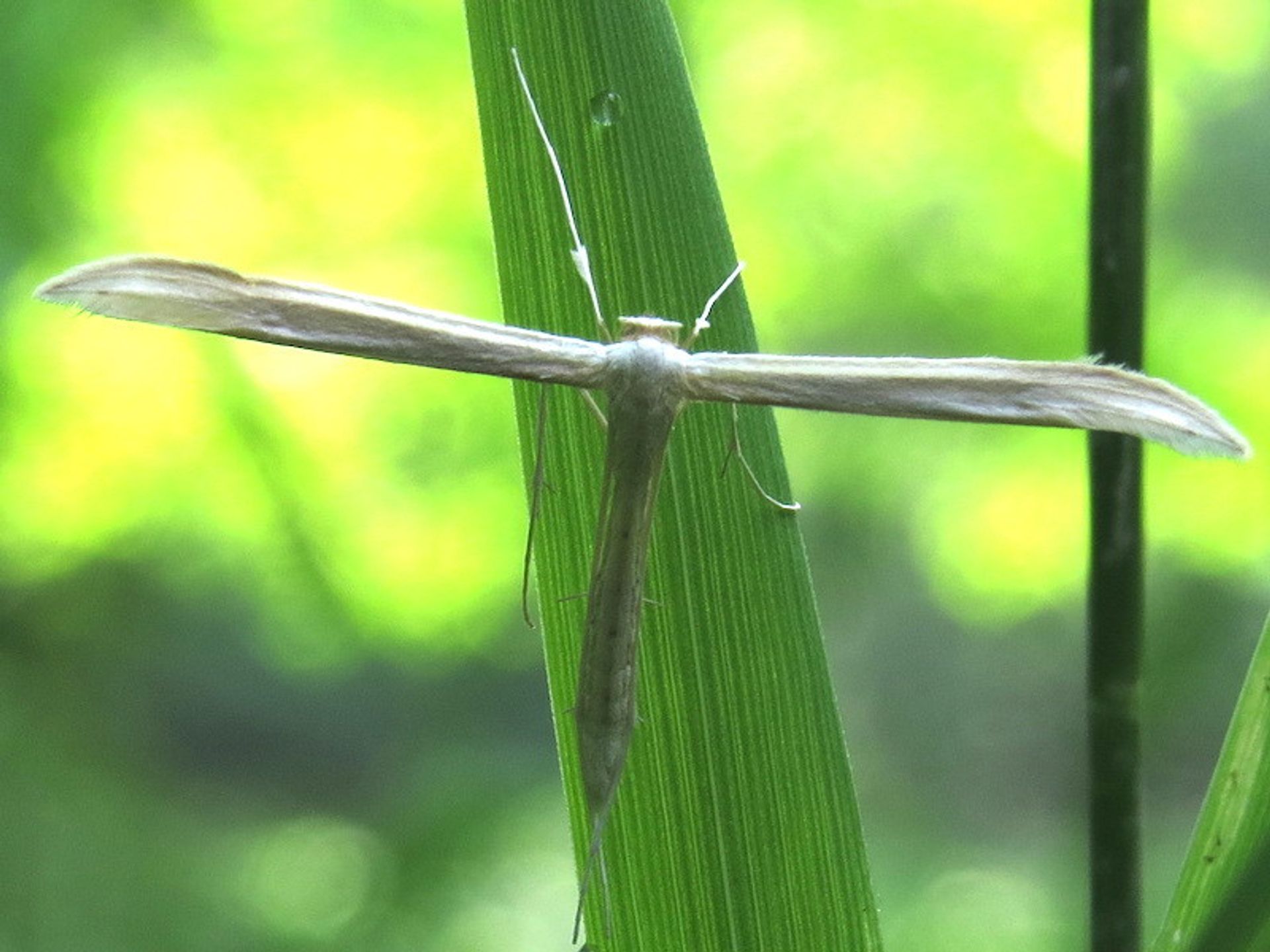
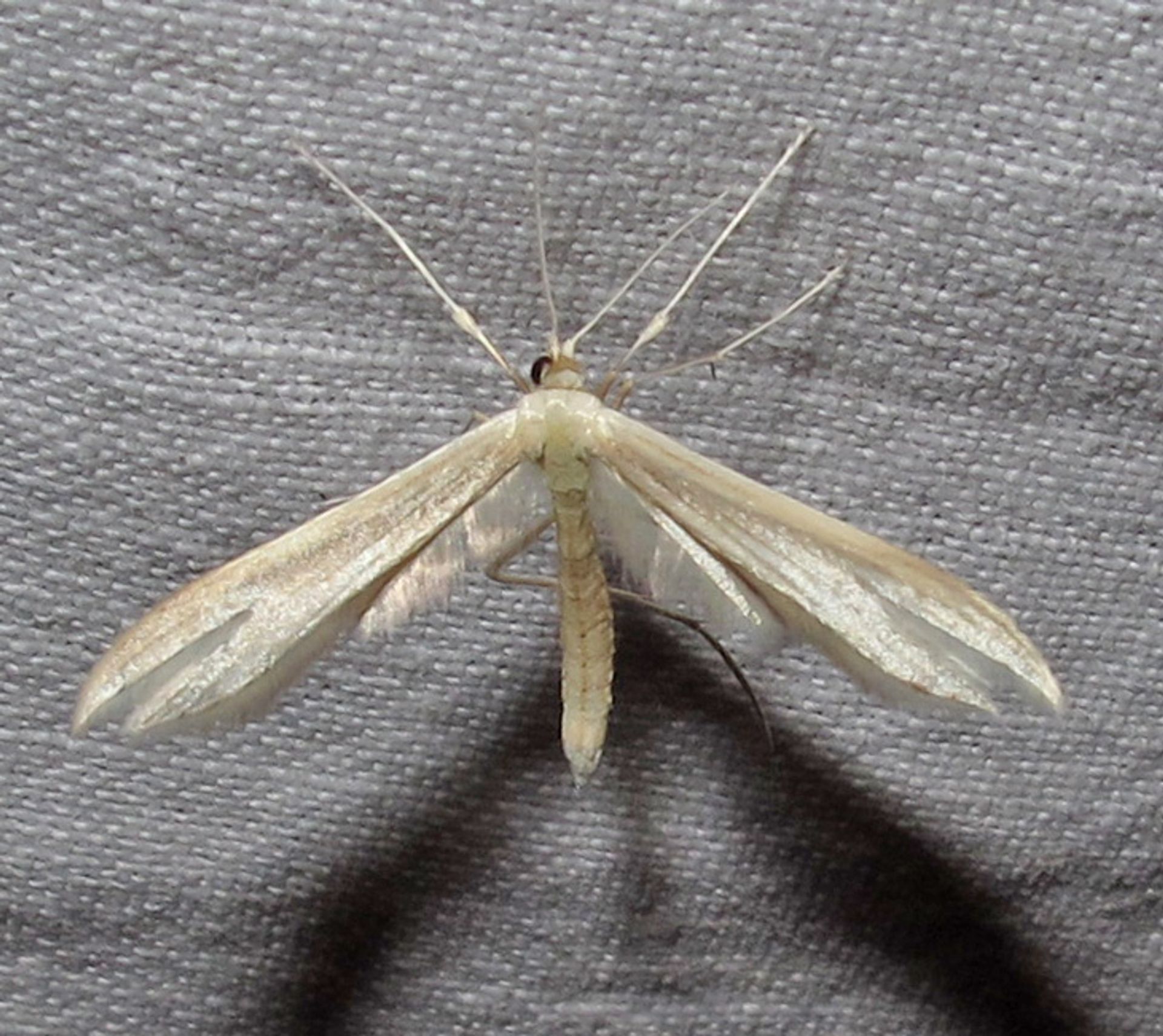
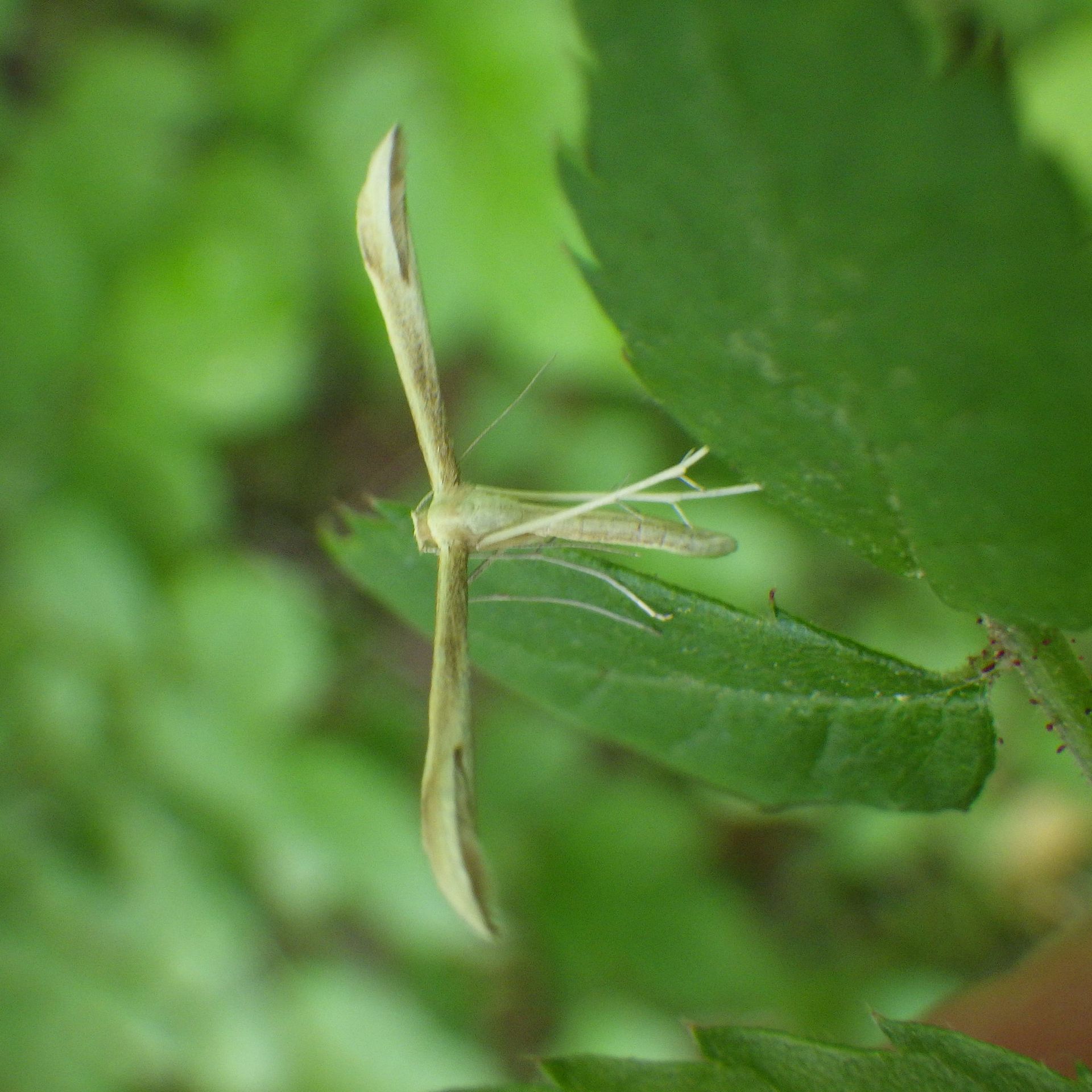
Hellinsia homodactylus is a in the Pterophoridae, first described by Walker in 1864. It is characterized by predominantly white coloration with subtle brownish markings on the forewings. The has a broad North American distribution spanning from the Atlantic coast to the Pacific, with additional records from Mexico. Notably, its larvae have been documented as of other insects, an unusual feeding strategy within the family.
Pronunciation
How to pronounce Hellinsia homodactylus: /hɛˈlɪn.si.ə hoʊ.moʊˈdæk.tɪ.ləs/
These audio files are automatically generated. While they are not always 100% accurate, they are a good starting point.
Identification
The combination of small size (22–27 mm wingspan), nearly pure white coloration, and subtle brownish forewing markings distinguishes this from many other plume moths. The brownish spot before the fissure base and the silky white hindwings are key features. Some specimens may be confused with other white Hellinsia species when brown markings are absent; genitalia examination may be necessary for definitive identification. The specific epithet 'homodactylus' refers to the similar structure of the legs.
Images
Distribution
North America: United States (New Hampshire, New York, Maryland, California, Oregon), Canada (Ontario, Quebec, British Columbia, Alberta), and Mexico (Guerrero). The broad transcontinental range suggests adaptability to varied conditions, though specific associations are not documented.
Diet
Larvae are , recorded feeding on Compsilura concinnata, Oxynops anthracinus, Pseudosiphona brevirostris, and Tachinophyto floridensis—all Diptera in the Tachinidae. feeding habits are not documented.
Host Associations
- Compsilura concinnata - larval Tachinid fly
- Oxynops anthracinus - larval Tachinid fly
- Pseudosiphona brevirostris - larval Tachinid fly
- Tachinophyto floridensis - larval Tachinid fly
Life Cycle
Complete (, larva, pupa, ) as in all Lepidoptera. Specific developmental timing and number of per year are not documented.
Ecological Role
As a of tachinid flies, larvae may function as hyperparasitoids if the tachinid themselves are parasitoids of other insects. This complex trophic relationship has not been fully elucidated.
Similar Taxa
- Other Hellinsia speciesMany Hellinsia share white or pale coloration and split-wing . H. homodactylus may be distinguished by the specific pattern of brownish forewing markings and the characteristic brownish spot before the fissure base, though some specimens lack these markings entirely.
- Other PterophoridaeThe is characterized by divided or deeply lobed wings. Within the family, the nearly pure white coloration with minimal patterning is relatively distinctive, though exact identification often requires examination of genitalia.
More Details
Larval biology
The lifestyle of the larvae is noteworthy within Pterophoridae. Most larvae are herbivorous, feeding on various plants. The shift to of tachinid flies represents an unusual dietary specialization. The specific mechanism of location and attack has not been described.
Taxonomic note
The iNaturalist record lists this as a 'complex' with the encompassing 'Plain, Elliott's, and Habeck's Plume Moths,' suggesting possible cryptic diversity or unresolved . However, Catalogue of Life and GBIF recognize it as a single accepted .