
Glutophrissa drusilla
(Cramer, [1777])
Florida White, tropical white
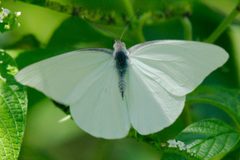
Glutophrissa drusilla is a pierid known as the Florida White or tropical white. It occurs from tropical America northward to southern Florida and the Florida Keys, with occasional records as far north as Nebraska and Colorado. The is associated with tropical lowland forests and is the only representative of its in North America. It is frequently observed in coastal Texas and has been recorded from multiple localities in Colombia.

Pronunciation
How to pronounce Glutophrissa drusilla: //ˌɡluːtoʊˈfrɪsə druːˈsɪlə//
These audio files are automatically generated. While they are not always 100% accurate, they are a good starting point.
Identification
Distinguished from other white butterflies in its North American range by its tropical origin and association with southern Florida . In Florida, it may be confused with Ascia monuste (Great Southern White), which has more pronounced dark wing margins and spotting, or with Pieris , which are smaller and show more distinct black forewing tips. The Florida White lacks the orange antennal clubs found in some other pierids. Accurate identification may require examination of wing venation and genitalia for specimens outside the known range.
Images
Appearance
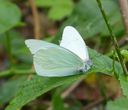
A medium-sized white with relatively plain, unmarked or lightly marked wings. The wings are typically white to pale cream in color with possible faint dark markings on the wing margins. may be present, with females sometimes showing more pronounced markings than males. The wing shape is typical of the Pieridae with rounded forewings and more angular hindwings.
Habitat
Tropical lowland evergreen or semideciduous forests. In Florida, occupies subtropical hardwood hammocks and coastal areas with suitable plants. Also recorded from disturbed and gardens where host plants occur.
Distribution
Native to tropical America from Brazil north through Central America and the Caribbean. In the United States, resident occur in southern peninsular Florida and the Florida Keys. Regularly visits coastal Texas as a non-breeding visitor. Documented as a rare stray to Nebraska and Colorado. Colombian records include San Vicente de Chucurí, Nariño (San Isidro, Reserva Natural La Planada), Villavicencio, Río Negro, and Parque Nacional Natural Serranía de Chiribiquete.
Seasonality
are active year-round in southern Florida where resident occur. Activity in Texas and other northern areas is sporadic and associated with warm-season events. Peak abundance in Florida likely coincides with favorable breeding conditions during warmer months.
Behavior
have been observed visiting flowers for nectar. The is known to disperse northward from core tropical , occasionally reaching areas far beyond the breeding range.
Human Relevance
Occasional garden visitor in southern Florida. Serves as an indicator of tropical quality in its native range. Rare northern records generate interest among lepidopterists.
Similar Taxa
- Ascia monuste (Great Southern White)Overlaps in Florida; distinguished by more extensive dark wing markings and orange antennal clubs
- Pieris rapae (Cabbage White)Overlaps in potential northern stray range; smaller size with distinct black forewing tips
- Glutophrissa agnataCongeneric in Central and South America; distinguished by distribution and subtle wing pattern differences
More Details
Taxonomic Note
The has been treated under the Appias in many sources, but current classification places it in Glutophrissa. The genus Glutophrissa is or contains few species in the New World, with G. drusilla being the only member reaching the United States.