
Kricogonia
Reakirt, 1863
Species Guides
1- Kricogonia lyside(lyside sulphur)
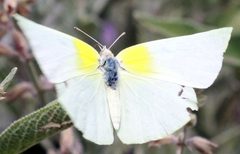
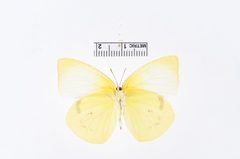
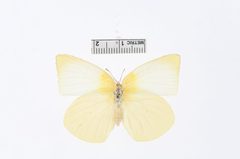
Kricogonia is a of pierid butterflies native to the Americas, established by Tryon Reakirt in 1863. The genus contains at least two recognized , including Kricogonia lyside (the lyside sulphur), which is notable for exhibiting mass . These butterflies are part of the sulphur group within the Pieridae.
Pronunciation
How to pronounce Kricogonia: /ˌkɹɪkoʊˈɡoʊniə/
These audio files are automatically generated. While they are not always 100% accurate, they are a good starting point.
Identification
Members of this can be distinguished from other pierid sulphurs by genitalia and wing pattern characters; K. lyside specifically shows pale yellow to greenish-yellow wing coloration with relatively simple patterning compared to some . Mass migratory of K. lyside may aid in field recognition when large are observed.
Images
Distribution
Native to the Americas, with occurring in the Neotropical region and extending into the southern United States. Mass of K. lyside have been documented in the southern USA, Mexico, and the Greater Antilles.
Behavior
Kricogonia lyside exhibits mass involving large numbers of individuals. These migrations are often unidirectional but can shift direction over short time periods. Migration events appear triggered by substantial rainfall following prolonged dry periods.
Similar Taxa
- PhoebisBoth are Neotropical pierid sulphur with yellow coloration; Phoebis are generally larger and lack the documented mass migratory characteristic of K. lyside
- EuremaSmall yellow sulphurs that overlap in distribution; Eurema are typically smaller with more complex wing pattern elements and different
More Details
Taxonomic history
The was erected by Tryon Reakirt in 1863, though some sources cite 1864. The genus contains Kricogonia cabrerai (Ramsden, 1920) and Kricogonia lyside (Godart, 1819). Genetic analysis of K. lyside indicates higher mitochondrial diversity in the COI gene compared to well-known migratory nymphalids such as Danaus plexippus and Vanessa cardui, with evidence of a large historical expansion during the mid-Pleistocene.