
Gyrocheilus
Butler, 1867
Species Guides
1- Gyrocheilus patrobas(Red-bordered Satyr)
Gyrocheilus is a in the Nymphalidae, containing only the Gyrocheilus patrobas, commonly known as the red-bordered brown. The genus is restricted to mountainous regions of the southwestern United States and Mexico. It belongs to the Satyrinae, a group often associated with forested and shade-tolerant .
Pronunciation
How to pronounce Gyrocheilus: /dʒaɪroʊˈkaɪləs/
These audio files are automatically generated. While they are not always 100% accurate, they are a good starting point.
Identification
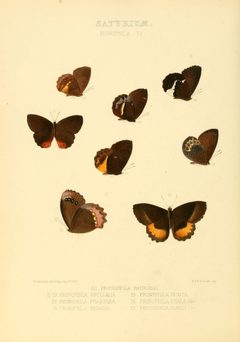
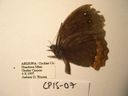
The can be recognized by its status within Satyrinae; the sole Gyrocheilus patrobas has a distinctive reddish-orange border on the wings, which provides the . It can be distinguished from other Satyrinae genera in its range by this color pattern and its specific association with coniferous forest streamside .
Images
Habitat
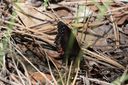
Streamsides in open coniferous forests in mountainous areas. The is specifically described as riparian zones within montane coniferous woodland.
Distribution
Central and southern Arizona, United States, and Mexico. The range is restricted to the southwestern North American highlands.
Similar Taxa
- CercyonisAnother Satyrinae found in western North America; differs in having multiple per genus and generally lacking the distinctive red wing borders seen in Gyrocheilus patrobas.
- SatyrodesNorth American Satyrinae with forest stream associations; have eyespots on wings rather than red borders and occur in eastern rather than southwestern North America.
More Details
Taxonomic history
Described by Arthur Gardiner Butler in 1867, the has remained throughout its taxonomic history, with no additional ever assigned.
Conservation status
Not formally assessed by IUCN; the restricted range in the southwestern United States and Mexico suggests potential sensitivity to alteration in montane riparian zones.