
Erebia mancinus
Doubleday, 1849
Taiga Alpine
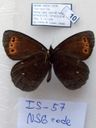
Erebia mancinus, known as the taiga alpine, is a in the Nymphalidae, Satyrinae. It inhabits subarctic and regions of North America, with a disjunct extending south to the Rocky Mountains. The is associated with wetland , specifically black spruce-sphagnum bogs. are active during a brief period in mid-summer.
Pronunciation
How to pronounce Erebia mancinus: /ɛˈre.bi.a ˈmæn.sɪ.nəs/
These audio files are automatically generated. While they are not always 100% accurate, they are a good starting point.
Identification
Distinguished from similar Erebia by its subarctic and distribution combined with association with sphagnum bog . Similar species include Erebia disa (Disa alpine), Erebia rossii (Ross's alpine), and Erebia youngi (Four-dotted alpine), which may overlap in range but differ in habitat preference and wing pattern details. Specific wing markings distinguishing E. mancinus from these are not documented in available sources.
Images
Habitat
Black spruce-sphagnum bogs. The shows a strong association with wetland coniferous forest in northern regions.
Distribution
Subarctic North America from Labrador, northern Quebec, and northern Ontario, westward through the northern Prairie Provinces, northern British Columbia, interior Northwest Territories, Yukon, and Alaska. Disjunct southern in the Rocky Mountains extending to Banff, Alberta. GBIF records also indicate presence in northern Europe (Finland, Norway), though taxonomic status of these populations requires verification.
Seasonality
on wing late June and July. period is brief and restricted to mid-summer in northern latitudes.
Diet
Larvae probably feed on sedges or grasses. Specific plant records are not confirmed.
Similar Taxa
- Erebia disaSimilar wing pattern and preference; may co-occur in parts of range
- Erebia rossiiOverlaps in subarctic distribution; distinguished by and wing markings
- Erebia youngiFour-dotted alpine with similar northern range
More Details
Taxonomic Status
Catalogue of Life and GBIF list Erebia mancinus as a synonym of Erebia disa, while NCBI and iNaturalist maintain it as a valid . This indicates ongoing taxonomic debate regarding the species' status.
Conservation Notes
The southern Rocky Mountain at Banff represents a significant range disjunction from the main distribution, potentially warranting conservation attention due to specificity and isolation.