
Coenonympha haydenii
(Edwards, 1872)
Hayden's ringlet
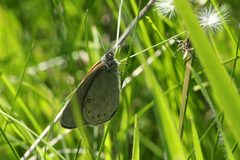
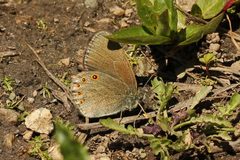
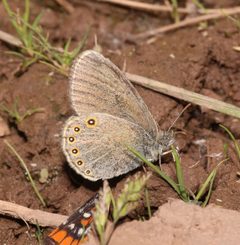
Hayden's ringlet is a narrowly in the Nymphalidae. Despite its restricted geographic range, the maintains genetic diversity levels comparable to more widespread butterflies. genetic structure is driven primarily by geographic isolation and distance rather than plant specialization. The species shows a strong feeding preference for grasses over sedges, though this preference does not correlate with genetic differentiation among populations.
Pronunciation
How to pronounce Coenonympha haydenii: /siːnəˈnɪmfə haɪˈdiːni.aɪ/
These audio files are automatically generated. While they are not always 100% accurate, they are a good starting point.
Images
Distribution
North America; narrow with restricted range. Specific localities not documented in available sources, but show genetic structure indicating historical isolation and limited contemporary .
Diet
Larvae and feed on grasses; the has been observed to show strong preference for grasses relative to sedges.
Host Associations
- grasses - food plantStrong feeding preference documented
- sedges - food plantConsumed but less preferred than grasses
Behavior
preference assays indicate strong feeding preference for grasses over sedges, though this behavioral trait does not correlate with genetic structure.
More Details
Genetic diversity
Despite narrow , Hayden's ringlet exhibits genetic diversity comparable to non- . This finding challenges assumptions that restricted-range species necessarily have reduced genetic variation.
Population structure drivers
Geographic barriers to and isolation by distance are the primary drivers of genetic differentiation, not plant availability or local . Neither larval host preference nor potential host availability at sampling sites correlated with genetic structure.
Sources and further reading
- BugGuide
- Wikipedia
- iNaturalist taxon
- NCBI Taxonomy
- Coenonympha nipisiquit Archives - Entomology Today
- Burning bogs. - Buglife Blog - Buglife
- Endangered Maritime Ringlet Shows Continued Decline in Eastern Canada
- Considerable genetic diversity and structure despite endemism and limited ecological specialization in the Hayden’s ringlet, Coenonympha haydenii
- Considerable genetic diversity and structure despite narrow endemism and limited ecological specialization in the Hayden's ringlet, Coenonympha haydenii