
Chlosyne fulvia
(W.H. Edwards, 1879)
Fulvia checkerspot
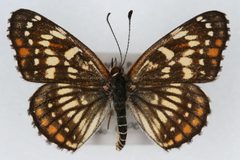
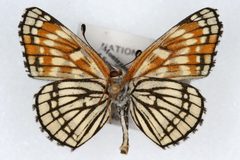
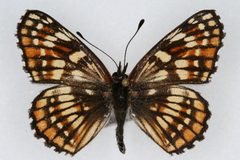
Chlosyne fulvia, the Fulvia checkerspot, is a in the Nymphalidae. The ranges from the southwestern United States (Kansas, Colorado, southern Utah, Arizona) south to central Mexico. have a wingspan of 32–50 mm and feed on flower nectar. The larvae are specialized feeders on Castilleja species, particularly Castillega integra and Castilleja lanata.
Pronunciation
How to pronounce Chlosyne fulvia: /ˈkloʊsaɪni ˈfʊlviə/
These audio files are automatically generated. While they are not always 100% accurate, they are a good starting point.
Identification
Chlosyne fulvia is a checkerspot with a wingspan of 32–50 mm. It can be distinguished from similar Chlosyne by its specific wing pattern and geographic range. The two recognized —C. f. fulvia (Texas) and C. f. coronado (Arizona)—may show regional variation in appearance.
Images
Distribution
North America from Kansas, Colorado, southern Utah and Arizona south to central Mexico. The C. f. fulvia occurs in Texas, while C. f. coronado is found in Arizona.
Diet
feed on flower nectar. Larvae feed exclusively on Castilleja integra and Castilleja lanata, consuming leaves and flowers of these plants.
Host Associations
- Castilleja integra - larval plantlarvae feed on leaves and flowers
- Castilleja lanata - larval plantlarvae feed on leaves and flowers
Life Cycle
Young larvae live together in a loose web. Third-instar larvae hibernate, completing development the following season.
Similar Taxa
- Chlosyne laciniaSimilar checkerspot in the same , found in overlapping range; distinguished by wing pattern details
- Other Chlosyne speciesShare checkerspot wing pattern and general ; identification requires examination of specific markings and geographic location