
Adelpha fessonia
Hewitson, 1847
Band-celled Sister, Mexican Sister
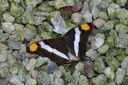
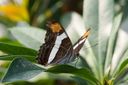
Adelpha fessonia is a in the Nymphalidae, commonly known as the band-celled sister or Mexican sister. The occurs from Panama northward through Central America to Mexico, with periodic vagrant establishing in the lower Rio Grande Valley of Texas. have a wingspan of 56–70 mm. The species exhibits partial patterns, with Texas populations representing temporary rather than permanent residents.

Pronunciation
How to pronounce Adelpha fessonia: /əˈdɛlfə fəˈsoʊniə/
These audio files are automatically generated. While they are not always 100% accurate, they are a good starting point.
Identification
Distinguished from other Adelpha by the specific configuration of orange bands with enclosed white spots on the wing surfaces. The 'band-celled' pattern refers to the white spots appearing as within the orange bands. In Texas, most likely to be confused with other vagrant or resident Adelpha species; reliable identification requires examination of wing pattern details, particularly the presence and arrangement of white spotting within the orange postmedian bands.
Images
Habitat
Tropical and subtropical forests, forest edges, and riparian corridors. In Texas, occurs in thorn scrub and subtropical woodlands of the lower Rio Grande Valley. frequent areas with flowering plants and rotting fruit.
Distribution
Native range extends from Panama north through Central America to Mexico. Periodic resident in southern Texas (lower Rio Grande Valley), where establish temporarily but may not persist year-round.
Seasonality
Activity patterns in native range not well documented. In Texas, observed primarily during late spring through fall; permanent establishment prevented by winter temperatures, requiring recolonization from Mexico.
Diet
Larvae feed on Celtis lindheimeri (hackberry) in Texas and northeastern Mexico. feed on nectar from flowers including Cordia, Croton, and Baccharis . Adults also consume decaying fruit.
Host Associations
- Celtis lindheimeri - larval food plantPrimary in Texas and northeastern Mexico
- Cordia - nectar source
- Croton - nectar source
- Baccharis - nectar source
Life Cycle
Complete with , larva, pupa, and stages. Larvae feed on hackberry leaves. Specific details of site and strategy not documented in available sources.
Behavior
exhibit typical nymphalid patterns with rapid, erratic movements interspersed with gliding. Frequently observed feeding at flowers and on fallen fruit. Males likely perch to await females, though specific territorial not described.
Ecological Role
function as when feeding at flowers. Larvae are herbivores that convert hackberry foliage to . Both life stages serve as prey for including birds, spiders, and predatory insects.
Human Relevance
Subject of interest for watchers and photographers in the lower Rio Grande Valley, where it represents one of the more regularly encountered Mexican . No significant economic impact; neither pest nor commercially important.
Similar Taxa
- Other Adelpha speciesShare similar wing shape and general 'sister' appearance; distinguished by specific band and spot patterns, particularly the arrangement of white within orange bands
- Limenitis speciesFormerly classified in same ; share similar size and general Nymphalidae ; distinguished by wing pattern details and current taxonomic placement
More Details
Taxonomic History
Originally described as Heterochroa fessonia by Hewitson in 1847. Has been placed in Limenitis in some classifications; currently accepted placement is in Adelpha. Listed as synonym of Limenitis fessonia in some databases.
Vagrant Status in Texas
Texas represent periodic immigration rather than permanent residency. The cannot survive winter conditions in the region and must recolonize from Mexican populations.